



I didn’t move to Thailand planning to start a sauna business. I moved here because I’d spent 25 years in the music industry, my body was paying the heavy toll, and I needed to do something different before it was too late.
Weighing 130kg, dealing with chronic arthritis in every joint, and having eczema that three dermatologists couldn’t fix, I never thought about saunas. After a supervised 40-day sauna detox, I experienced major changes: my arthritis improved within two weeks, my eczema cleared up after a month, and I lost 42 kilograms in a year. According to a report from Time, studies have identified a strong link between frequent sauna use and a reduced risk of cardiovascular diseases such as heart failure and coronary heart disease, though there is no scientific evidence specifically confirming that sauna detox leads to these personal health outcomes that directly lead to rapid improvements in arthritis, eczema, or dramatic weight loss.
That was just the beginning. Now, I co-own Sisu Sauna Thailand with Pat, a Finnish sauna builder with years of experience. Lately, we’ve seen more expats in places like Bangkok, Phuket, Hua Hin, Chiang Mai, and Pattaya adding saunas and ice baths to their homes. According to The Borderless Office, locations such as Koh Phangan in Thailand are well known for offering saunas, steam rooms, and ice baths, attracting expats who are increasingly interested in these wellness facilities.
Resorts, villas, condos, gyms, and wellness centres are also upgrading their saunas and adding ice baths and onsens in response to customer demand.
Here’s why.
What’s Driving Expats to Invest in Home Wellness Equipment?
Thailand’s wellness industry is growing fast. The Global Wellness Institute valued it at over US$6 trillion worldwide in 2023, and Thailand is becoming a major hub. Most of this growth has been in spas, retreats, and clinics—places you go to visit.
According to the Bangkok Post, Thailand is seeing significant growth in sports equipment sales as more consumers, including expats, focus on health and wellness at home. People want wellness to be part of their daily lives, not just something for holidays.
For expats, there’s also a practical reason. It’s hard to find a good sauna in Thailand. Many hotel and gym saunas are not well-maintained, run at the wrong temperature, or are small infrared boxes sold as “Finnish” but aren’t authentic. According to a recent review, the tradition of regular sauna use is deeply rooted in Finnish culture and is becoming more popular worldwide as people recognise its potential health benefits.
The short answer is yes, and the evidence is strong.
The most significant body of research comes from the University of Eastern Finland, led by Dr Jari Laukkanen and his team. Their prospective cohort study, published in JAMA Internal Medicine (2015), followed over 2,300 Finnish men for more than 20 years. Those who used a sauna 4-7 times per week had a 63% lower risk of sudden cardiac death compared to those using it once a week.
That’s a significant difference.
Since then, the same research group has published findings linking regular sauna use to reduced risk of stroke (Neurology, 2018), lower rates of hypertension (American Journal of Hypertension, 2017), reduced risk of dementia and Alzheimer’s disease (Age and Ageing, 2017), and lower all-cause mortality. According to a review published in Mayo Clinic Proceedings, sauna bathing may be associated with a reduced risk of high blood pressure, cardiovascular disease, neurocognitive diseases, and pulmonary conditions, while also improving symptoms of arthritis and headaches, and enhancing brown fat activation, which plays a role in metabolic health.
I’m not a doctor, but after years of using a sauna and ice bath every day, my arthritis is under control, I sleep much better, and I recover from exercise more quickly. The science reassures me that these results aren’t just in my head.
Why Does It Matter That a Sauna Is “Finnish”?
This is something many people get wrong.
In Finland, a sauna isn’t just a wellness trend; it’s as common as having a bathroom. There are about 3.3 million saunas for 5.5 million people. Pat grew up in a place where every home has a sauna, and building them is a skill passed down through generations.
A Finnish sauna runs at 80-100°C (176-212°F) with low humidity, which you control by pouring water over hot stones—what Finns call löyly. The steam, air flow, bench placement, and wood choice all make a big difference in the experience.
According to Global Sauna Manufacturing, many saunas sold in Thailand are made in China and may contain toxic glues that emit harmful fumes when heated, potentially causing health issues such as headaches, dizziness, and nausea. A real Finnish sauna uses special timber for tropical weather, proper ventilation, and TÜV-certified stone heaters that create true löyly, not just hot air.
At Sisu, Pat personally oversees the construction of each sauna, which is built by our Thai craftsmen. The Finnish heritage isn’t just for show; it’s why our saunas work as they should.
What Types of Saunas Can Expats Buy in Thailand?
It depends on your space, budget, and whether you want an indoor or outdoor sauna.
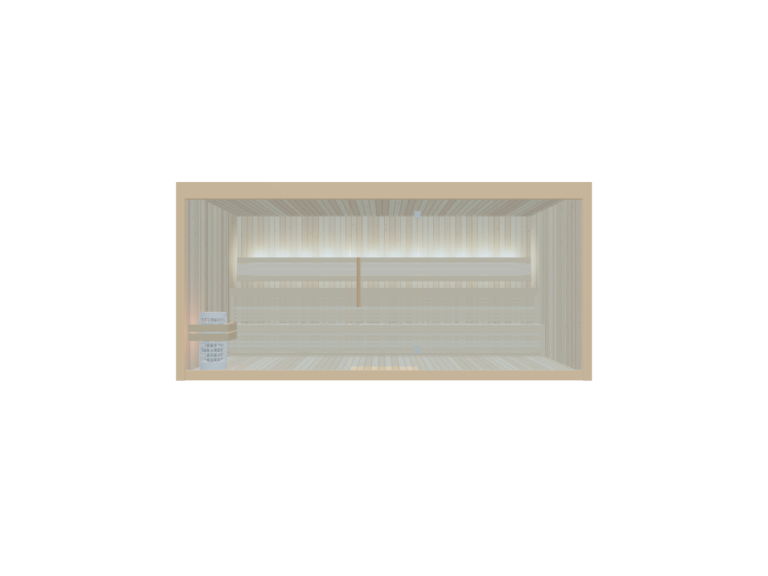
For indoors, our Nallak Modern Sauna is the top choice for expats. It comes in sizes for 2, 4, 6, or 8 people and fits well in a spare room, garage, or custom space. With clean lines, a glass front, and a modular design, two people can put it together in a day.
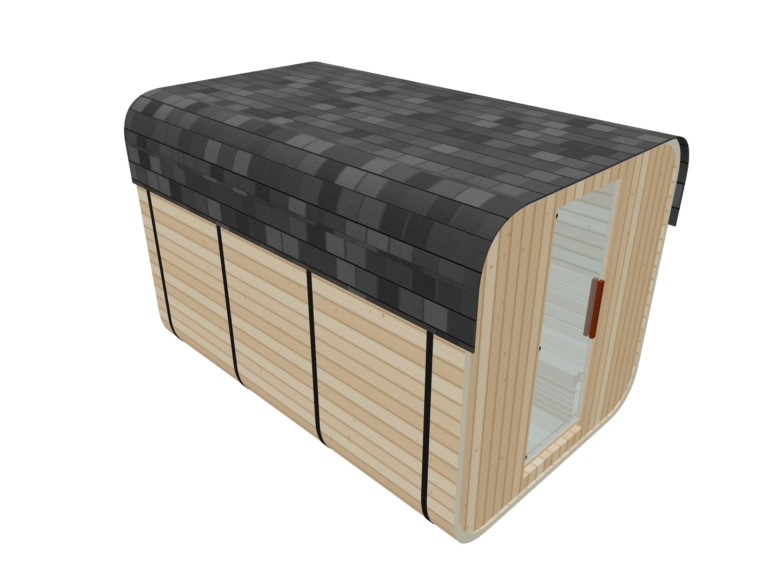
For outdoor use, the Fah Outdoor Sauna Room is our premium line. You’ll see these on rooftops and in gardens around Bangkok and Phuket. They come in sizes for 2 to over 14 people, with weatherproof roofs, full glass fronts, and options for pine, red cedar, or teak. The 8 and 10-person models are favourites for expats who like to entertain.
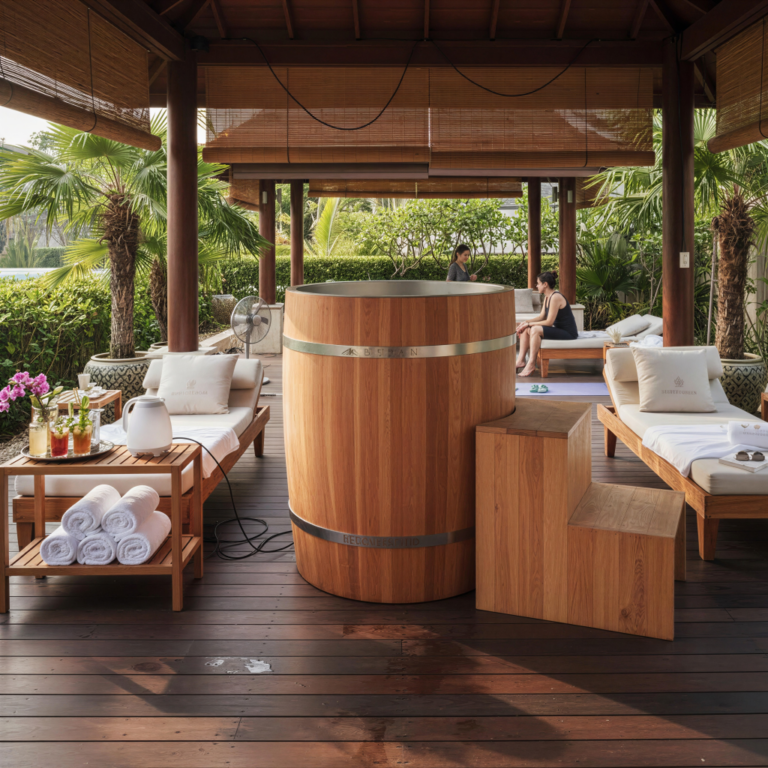
We also offer barrel saunas in the Jai Dee range, which have the classic Nordic look. They come in sizes for 3 to 8 people, with options for porches and panoramic windows. These are great if you want a standout feature in your garden without a big construction job.
If you have less space or a smaller budget, the Sabai Dee Cube Traditional Sauna starts with a 1-person unit and goes up to 6-person. It’s compact, efficient, and still meets Finnish standards.
If none of the standard options works for you, we can build a custom sauna to your specifications. Pat has constructed a range of saunas, from compact condo units to large-scale, 14-person commercial installations for hotels and gyms.
A 2025 study published in Scientific Reports examined how sauna heating and cold water immersion affect cardiovascular responses in healthy women.
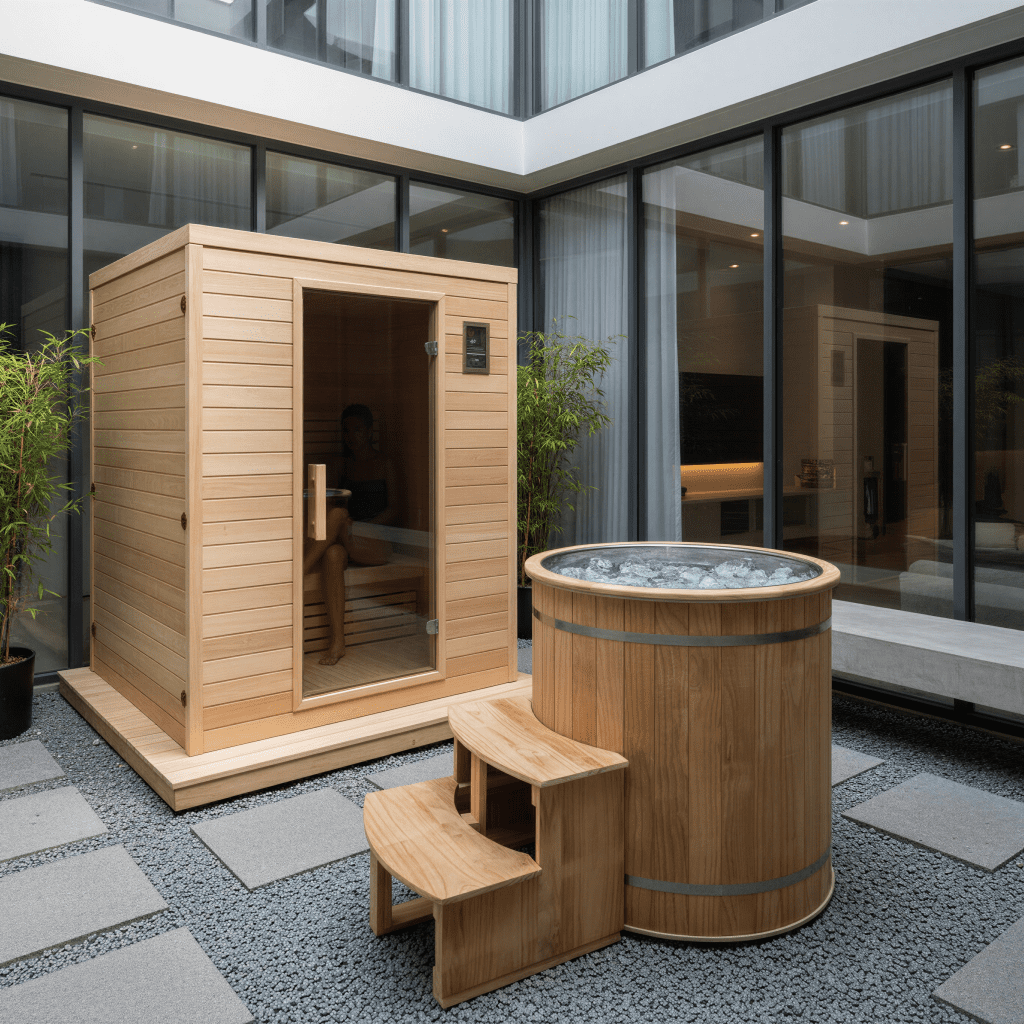
If you already use a sauna, adding cold therapy is a logical next step. The mix of heat and cold brings even more benefits—better circulation, faster recovery, improved sleep, and a mental toughness you have to experience to understand.
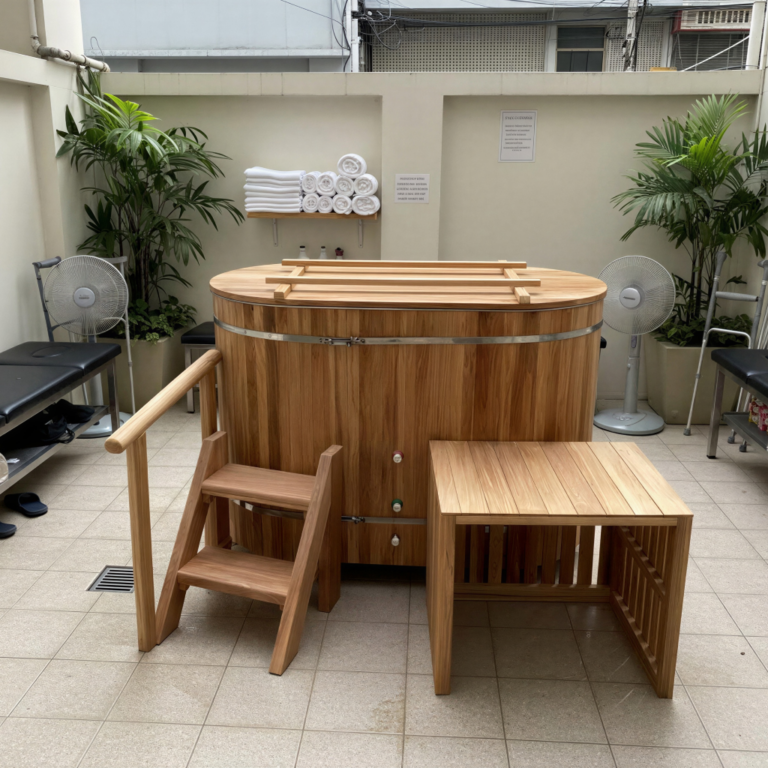
We have several types of ice baths. According to Utopia Valley Saunas, the premium range features outdoor barrel saunas made from 100 per cent Western Red Cedar, offering an authentic sauna experience with real wood exteriors and modern design options.
If you want a complete system, our all-in-one ice baths have built-in chillers, so you don’t need to use bags of ice. According to SaunaLife, the Model S2N immersion tub is designed for easy use, allowing you to set a desired temperature for hot or cold therapy without hassle—just fill it, set your temperature preference, and enjoy your session.
We also offer standalone chillers for people who already have a plunge pool or want to add a chiller to a custom setup.
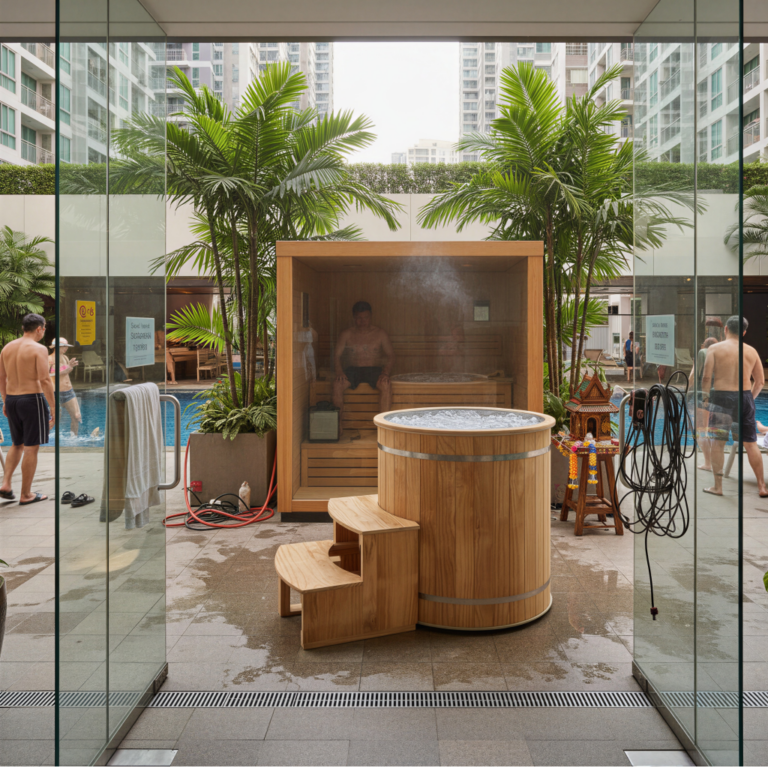 Discounted
Pine 2 Person Sauna & Ice Bath
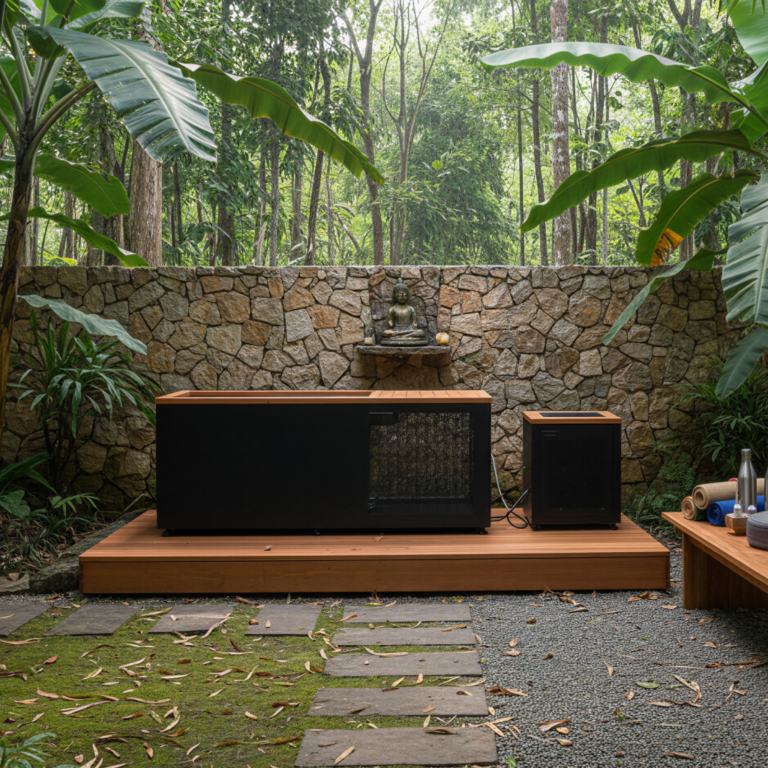 Premium
Discounted
Premium
Discounted
All-in-one Ice Bath | Red Cedar & Stainless Steel
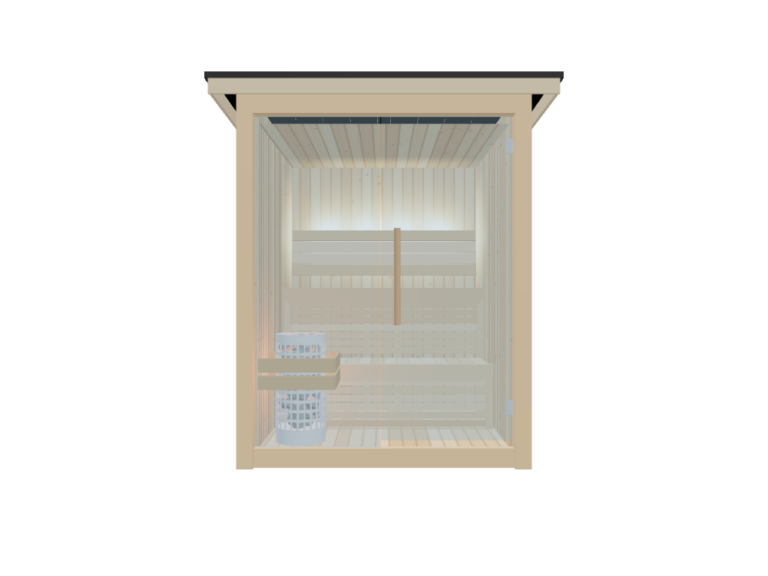
The Fah Outdoor Sauna Room – 2-3 Person
Why Does Local Manufacturing Matter?
Most sauna and ice bath companies in Thailand import flat-packed units from Chinese factories, and that’s what you receive.
We build everything locally in our workshop in Surin, Thailand, with Pat personally checking the quality. This makes a real difference for several reasons.
First, we control quality. Every unit is checked before it leaves our workshop. We don’t just open a container and hope everything is correct.
Second, we can customise. Need a sauna that’s 50mm wider, a different wood, or a special window layout? We can do that because we build each one ourselves.
Third, we build for the Thai climate. Thailand’s heat and humidity are tough on wood, so we use thermally modified timber and special construction methods for tropical weather. A sauna made for Finnish winters won’t work in Bangkok without changes.
Fourth, there’s no import markup. Since we don’t ship containers from overseas, the costs are lower. You get a better product at a better price.
Fifth, we offer local support. If you need help after installation, we’re here in Thailand—not sending you to a customer service line overseas.
How Much Does a Home Sauna Cost in Thailand?
The price depends a lot on what you want.
A compact 1-person Sabai Dee Cube starts at a different price point than a 14-person Fah Outdoor with teak cladding and a premium heater package. Rather than throwing numbers that might not apply to your situation, I’d suggest browsing the full range on our website or getting in touch for a quote.
But here’s what I can say: because we build locally, our prices are as good as or better than Chinese imports, and our quality and support are on another level.
Every sauna includes a TÜV-certified stone heater and a wall-mounted touchscreen controller, with the option to add WiFi app control. Delivery is free across Thailand, and we provide assembly and ongoing support.
 Premium
Discounted
Premium
Discounted
Barrel Plunge Ice Bath | Red Cedar & Stainless Steel
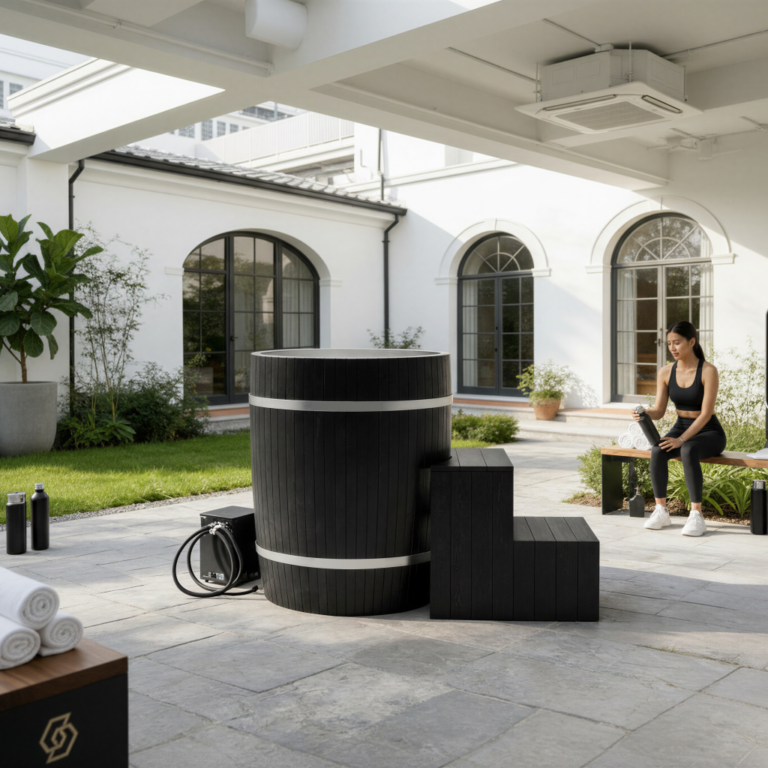 Discounted
2-3 Person Pine Sauna & PVC & Stainless Steel Ice Plunge Bath (No Chiller)
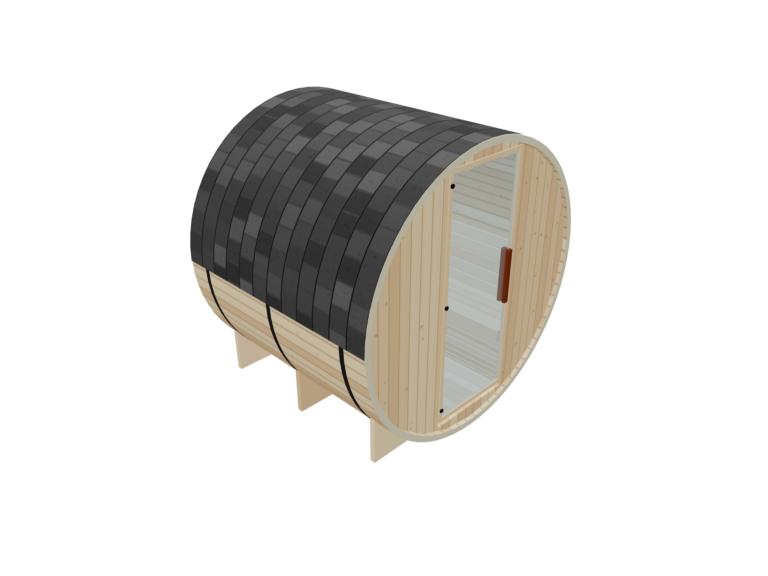
Barrel Sauna Room – 4 Person
Is It Difficult to Install a Sauna in Thailand?
It’s easier than you might think. Our saunas are modular, so two or three people can put them together without special tools or building experience. It’s like assembling high-quality flat-pack furniture, but with real timber joinery.
The main thing you need is a suitable electrical supply. Saunas up to 12kW run on single-phase power, which most Thai homes have. Larger units (commercial or large residential) need three-phase power, which an electrician can arrange.
For the sauna, you just need a flat surface (indoors or outdoors), a power outlet, and, if possible, some ventilation. We provide full installation instructions and can recommend local electricians who are familiar with our products.
Ice baths are even simpler. You only need a flat surface, a water supply, and a power outlet for the chiller.
Should You Get a Sauna If You Live in a Hot Country?
Expats who haven’t tried it ask me this question the most.
“Why would I want to sit in a hot room when it’s already 35°C outside?”
That’s a fair question. The honest answer is that it’s a completely different experience.
Thailand’s heat is humid and constant, which can be exhausting. A Finnish sauna, on the other hand, is controlled, intense, and short—usually 15-20 minutes at 80-100°C—followed by a cool-down. Your body reacts very differently compared to just being hot and sweaty in Bangkok traffic.
When you use a sauna, your body’s heat shock response triggers a series of beneficial changes: increased heat shock proteins, improved heart health, endorphin release, and your parasympathetic nervous system kicking in during the cool-down. None of this happens just sitting in a hot taxi.
If anything, living in Thailand makes ice baths even more attractive. Stepping into 5°C water when it’s 35°C outside is a real game-changer. The contrast is stronger, the effect is immediate, and the relief is much greater.
What Should You Do Next?
If you’re an expat in Thailand thinking about getting a sauna or ice bath at home, here’s my honest advice:
First, consider your space. Do you want it indoors or outdoors? How many people will use it? Do you want just a sauna, just an ice bath, or both?
Next, check out the options at sisusauna.app. Each product page has a configurator where you can pick the size, wood type, heater, and extras, and see the price update instantly.
If you’re unsure what’s right for you, just reach out. I personally answer all enquiries and am happy to discuss your options with no pressure. I’ve been in your shoes, wondering if it’s worth it. For me, it made a huge difference.
Frequently Asked Questions About Saunas in Thailand
How much does a home sauna cost in Thailand?
Prices vary based on size, type, and wood selection. Compact indoor saunas start from a lower price point, while large outdoor premium saunas with teak are at the higher end. Visit sisusauna.app to view real-time pricing via our product configurator, or contact us for a personalised quote.
Can I install a sauna in a Thai condo or apartment?
In many cases, yes. Compact models like the 1 or 2-person Sabai Dee Cube or Nallak can fit in a spare room or even a large bathroom. The main requirement is a suitable electrical supply and building management approval. We can advise on the feasibility for your specific space.
Do I need a chiller for an ice bath, or can I use ice?
You can use ice, but it’s impractical for regular use — expensive, messy, and inconsistent temperature. A dedicated chiller maintains your water at your chosen temperature (3°C to ambient) automatically. We recommend a chiller for anyone planning to use their ice bath regularly.
What’s the difference between the saunas sold at Sisu and Chinese imports?
Standard delivery for our saunas is typically 4 to 6 weeks from order confirmation for most locations in Thailand, and custom sizes may need extra time. Your specific delivery schedule will be confirmed when you place your order, according to Sisu Sauna Thailand.
Most standard products are ready within 2-4 weeks. Custom builds take longer, depending on the specification. Delivery is free throughout Thailand, and we provide full assembly support.