
Why Ventilation Matters in a Sauna
A sauna without proper airflow is stuffy, unpleasant, and potentially unsafe. Fresh oxygen needs to enter, stale air needs to leave, and the heat needs to circulate evenly from floor to ceiling. Get this wrong and the experience suffers — the lower bench stays cold while the upper bench scorches, and the room feels heavy rather than invigorating.
Most people assume good ventilation means cutting holes in walls or installing vents near the roof. At Sisu Sauna, we take a different — and in our view, better — approach: gaps in the floor and a generous gap under the door. No wall penetrations, no roof vents, no mechanical fans required.
How the Airflow Actually Works
The principle is straightforward and rooted in basic physics. Heat rises. As the sauna heats up, hot air naturally climbs toward the ceiling. That rising air has to be replaced by something — and that something is fresh, cooler air drawn in from below.
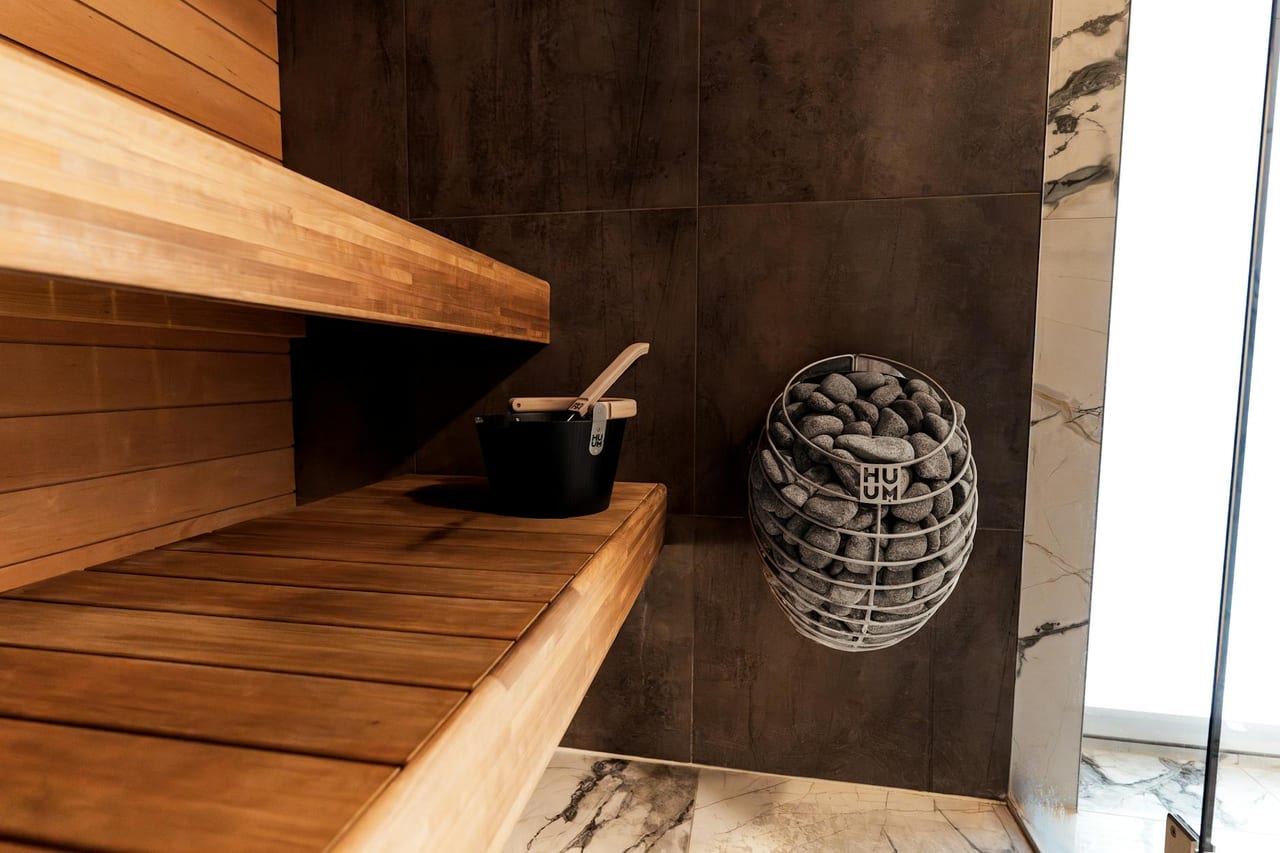
Here is the full circulation loop in our saunas:
- Fresh air enters through the gap under the door, low at floor level where it is coolest.
- The heater warms this incoming air, which then rises toward the ceiling.
- Hot air circulates across the ceiling and down the walls, warming the entire room evenly.
- Stale air exits through gaps in the floor boards, escaping beneath the sauna structure.
The result is a continuous, gentle, self-regulating cycle driven entirely by convection — no moving parts, no noise, no energy wasted on fans.
The Door Gap: Your Primary Fresh-Air Intake
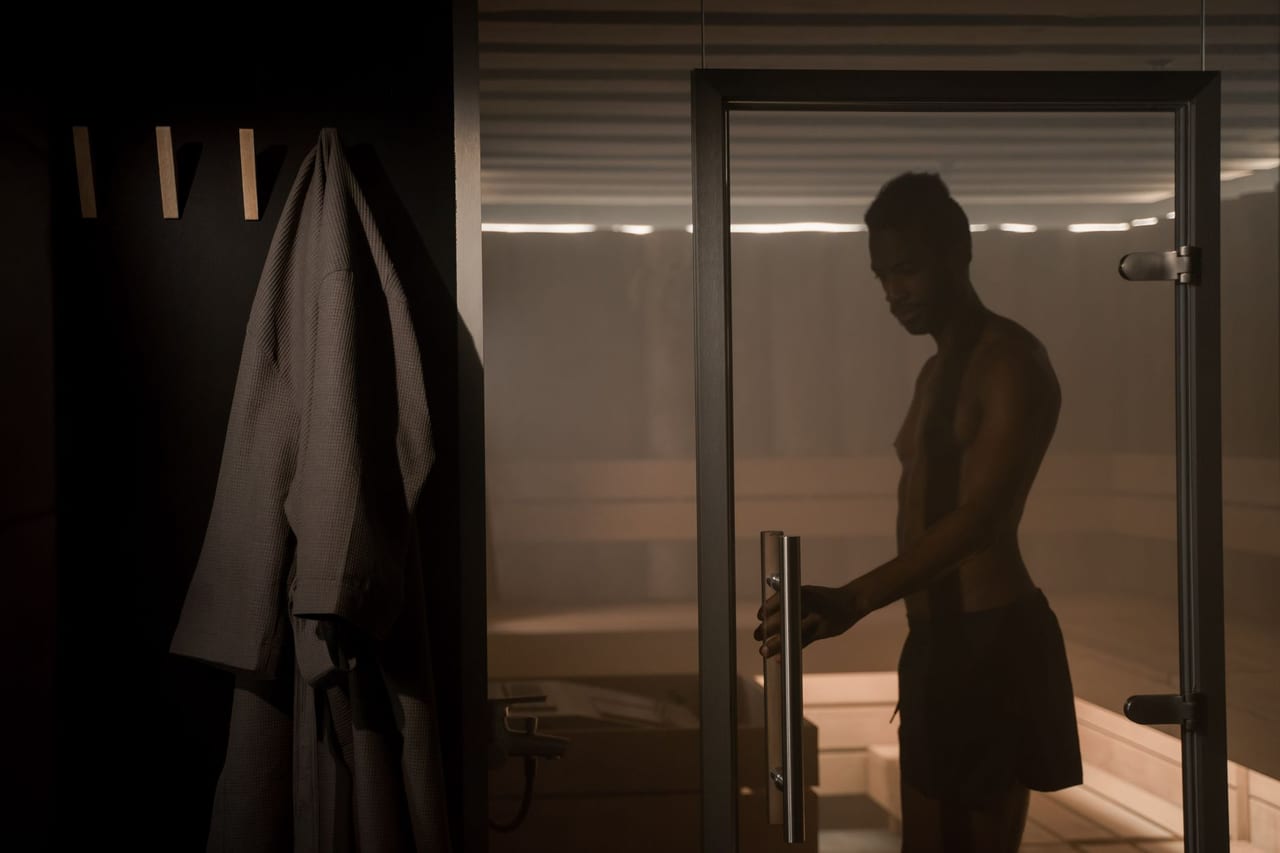
The gap under the sauna door is the lungs of the room. We size this gap carefully so that enough fresh air enters to keep oxygen levels comfortable and feed the heater, without creating a cold draught that kills the heat near the floor.
Because the intake is at the very bottom of the door, the cold incoming air hugs the floor before the heater catches it. Bathers on the benches — sitting or lying 60–90 cm above the floor — never feel a chill from this airflow. It is invisible and unfelt, yet absolutely essential.
Floor Gaps: The Exhaust You Never See
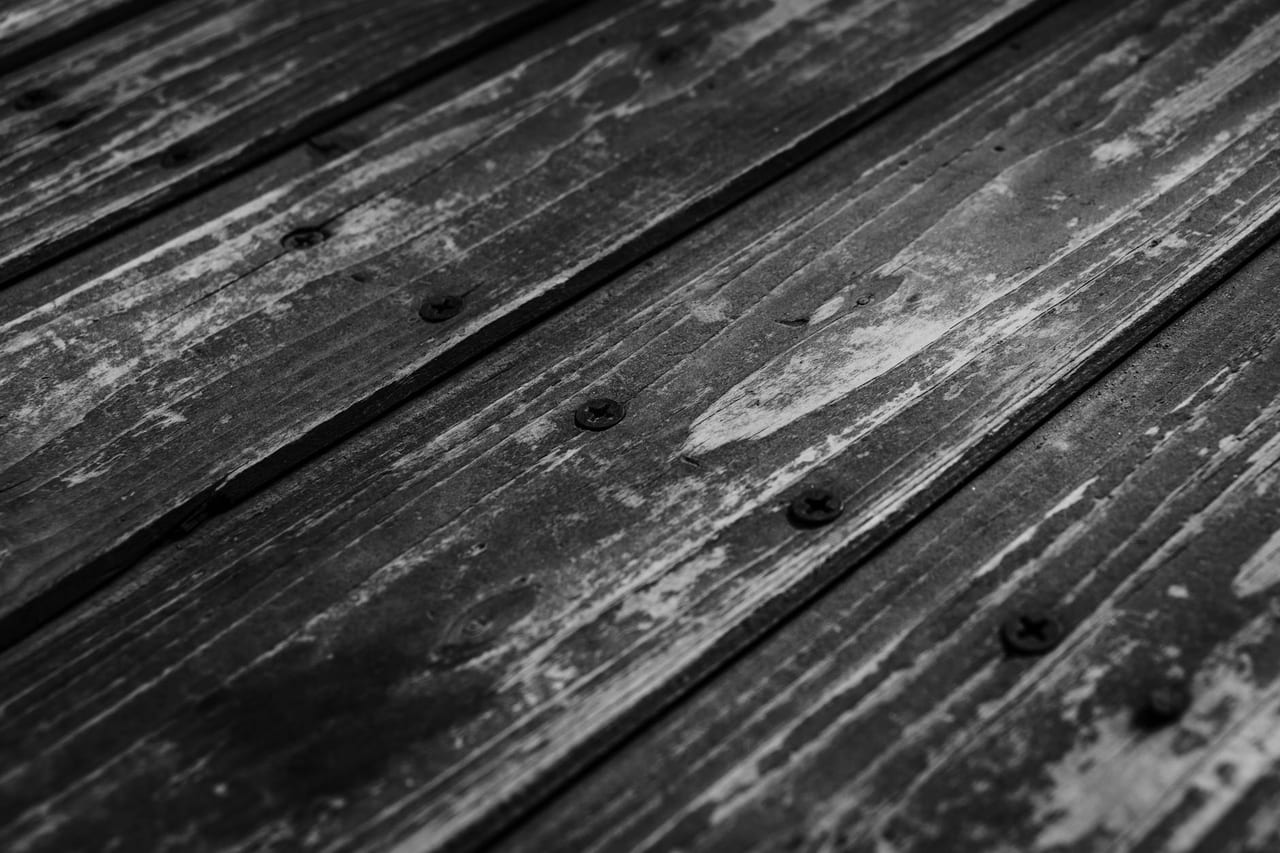
The floor boards in a Sisu Sauna are laid with small, deliberate gaps between them. These gaps do double duty: they let water and steam drain away easily after use, and they act as the exhaust vent for the ventilation system.
Stale, humid air that has dropped back down to floor level finds its way out through these gaps and vents away under the raised floor platform. Because the exit point is at the lowest part of the room, the air that leaves has already given up most of its heat to the room — meaning very little energy is wasted.
There is an additional benefit that is easy to overlook: carbon dioxide (CO₂) is heavier than the warm air in the upper part of the sauna. As you breathe, CO₂ gradually sinks and accumulates near the floor. With floor gaps as the exhaust, this denser, CO₂-rich air is precisely what gets pushed out first — keeping the air around the benches fresher and more oxygen-rich for longer. It is a passive, physics-driven solution that works quietly in the background every single session.
Why We Skip Wall Vents and Roof Vents
Wall vents and roof vents are common in traditional Finnish sauna design, and they work — but they come with trade-offs that we believe are unnecessary:
- Penetrations in walls or the roof create potential weak points for moisture ingress over time.
- A high exhaust vent near the ceiling pulls out the hottest air in the room, wasting energy and making it harder to reach your target temperature.
- A ceiling-level vent also removes the lightest, most oxygen-rich air — exactly the opposite of what you want to exhaust.
- More holes mean more complexity, more sealing work, and more things to maintain.
By keeping the airflow path entirely at floor level — in through the door gap, out through the floor boards — we eliminate all of these issues. The hot air stays where you want it: up high, surrounding the bathers. Only the spent, CO₂-heavy, cooler air at floor level is removed.
A Cleaner Build, a Better Sweat
This ventilation philosophy fits perfectly with Sisu Sauna's broader approach to building: keep it simple, keep it functional, keep it beautiful. Fewer penetrations mean a cleaner exterior, a more weather-tight structure, and a sauna that is easier to maintain for years to come.
The airflow is quiet, consistent, and completely passive. You will never need to adjust a vent, clean a filter, or replace a fan. You simply heat the sauna, step inside, and breathe easy — knowing that fresh air is always gently moving through the room, and that CO₂ is quietly finding its way out through the floor, exactly as it should be.
Good ventilation in a sauna is not about how many holes you cut — it is about putting the right gaps in the right places.