
Why the Contrast Matters
Heat and cold have been used together in Nordic and Japanese wellness traditions for centuries — the Finnish sauna followed by a roll in the snow, or the Japanese rotenburo beside a cold mountain stream. The modern version pairs a sauna session with an ice bath or cold plunge, and the science behind it is compelling enough to have moved this practice from athletic recovery rooms into home wellness setups across the world.
Used separately, a sauna and an ice bath each deliver real benefits. Used together in sequence, those benefits compound in ways that neither can achieve alone.
What Happens in the Sauna
Inside a sauna at 70–90 °C, your body responds quickly. Blood vessels dilate, circulation increases, and your heart rate climbs to levels similar to light exercise. Core temperature rises and you begin to sweat heavily — the body's way of managing that heat.
- Cardiovascular conditioning: Repeated sauna use has been linked in Finnish population studies to reduced risk of cardiovascular events, likely because of the demand placed on the heart and vessels.
- Muscle relaxation: Increased blood flow and heat penetrate deep into muscle tissue, easing tension and soreness — which is why saunas have long been used after exercise.
- Heat shock proteins: Sustained heat exposure triggers the production of heat shock proteins, which help repair damaged proteins and support cellular resilience.
- Mental calm: The enforced stillness of a sauna, combined with the release of endorphins, produces a genuine sense of calm that many users describe as the clearest part of their day.
What Happens in the Ice Bath
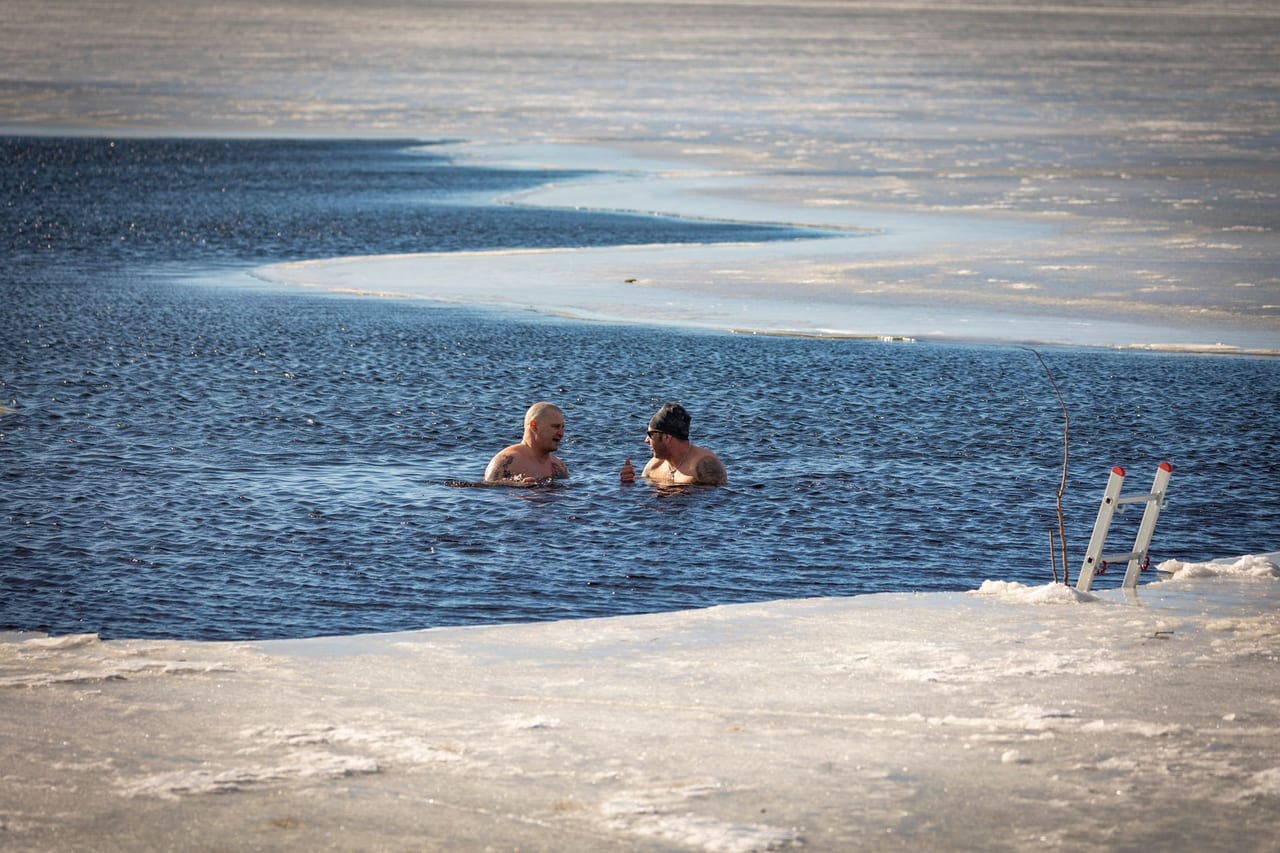
Stepping into cold water at 10–15 °C after a sauna sends an immediate, sharp signal through your nervous system. Vasoconstriction kicks in, pulling blood toward your core. Then, as you acclimatise, something more interesting happens.
- Norepinephrine surge: Cold immersion causes a dramatic spike in norepinephrine — a neurotransmitter linked to focus, mood, and pain reduction — often lasting several hours after the plunge.
- Reduced inflammation: The cold constricts blood vessels and slows inflammatory processes, which is why athletes use cold water immersion to recover faster after competition.
- Dopamine release: Research has shown that cold exposure causes a sustained rise in dopamine, the molecule most associated with motivation and a sense of wellbeing.
- Mental toughness: The act of choosing to enter cold water, and staying calm once you're in it, builds a measurable tolerance for discomfort that carries over into other areas of life.
Why Combining Them Works So Well
The contrast between heat and cold creates what is sometimes called a vascular pump. As you move from the sauna to the ice bath and back, your blood vessels dilate and then constrict repeatedly — an effect that drives circulation more forcefully than either stimulus alone. Metabolic waste moves out of tissues faster, oxygen-rich blood moves in, and the lymphatic system gets a mechanical assist it wouldn't receive from passive rest.
Mentally, the transition from the profound relaxation of the sauna to the sharp alertness of cold water creates a reset that many practitioners describe as a complete shift in mental state — calm but focused, relaxed but energised. This is not a small effect. Regular practitioners often report that this pairing becomes the cornerstone of how they manage stress, sleep and daily energy.
A Simple Protocol to Follow
If you're new to hot-cold contrast therapy, start conservatively. Your body adapts quickly, and you can always increase intensity over time.
- Warm up in the sauna: 10–15 minutes at a comfortable temperature (70–80 °C to start). Don't push to exhaustion on your first round.
- Cool the sauna down mentally first: Sit outside in the air for 1–2 minutes before the plunge — this makes the cold transition easier.
- Enter the ice bath: 2–5 minutes at 10–15 °C. Focus on slow, controlled breathing rather than gasping. Keep your hands out if the cold is intense.
- Rest: Return to the sauna or sit in a warm space for another 10–15 minutes.
- Repeat: 2–3 rounds is a solid session. End on cold for recovery-focused sessions; end on heat for relaxation-focused ones.
Health note: If you have a heart condition, high blood pressure, are pregnant, or have other health concerns, please check with your doctor before starting any hot-cold protocol. Contrast therapy places real demands on the cardiovascular system.
Setting Up Your Own Hot-Cold Space
The best results come from having both within a few steps of each other — ideally outdoors where the fresh air adds to the experience. At Sisu Sauna we build custom outdoor and indoor saunas alongside teak-clad oval ice baths, sized from single-person plunges to multi-person setups, so the whole system can be designed around your space from the start.
You can configure the sauna, pick your wood, and see live pricing in our free 3D designer at sisusauna.app. Or if you'd prefer to talk through the options first, drop us a line at sales@sauna.in.th.