
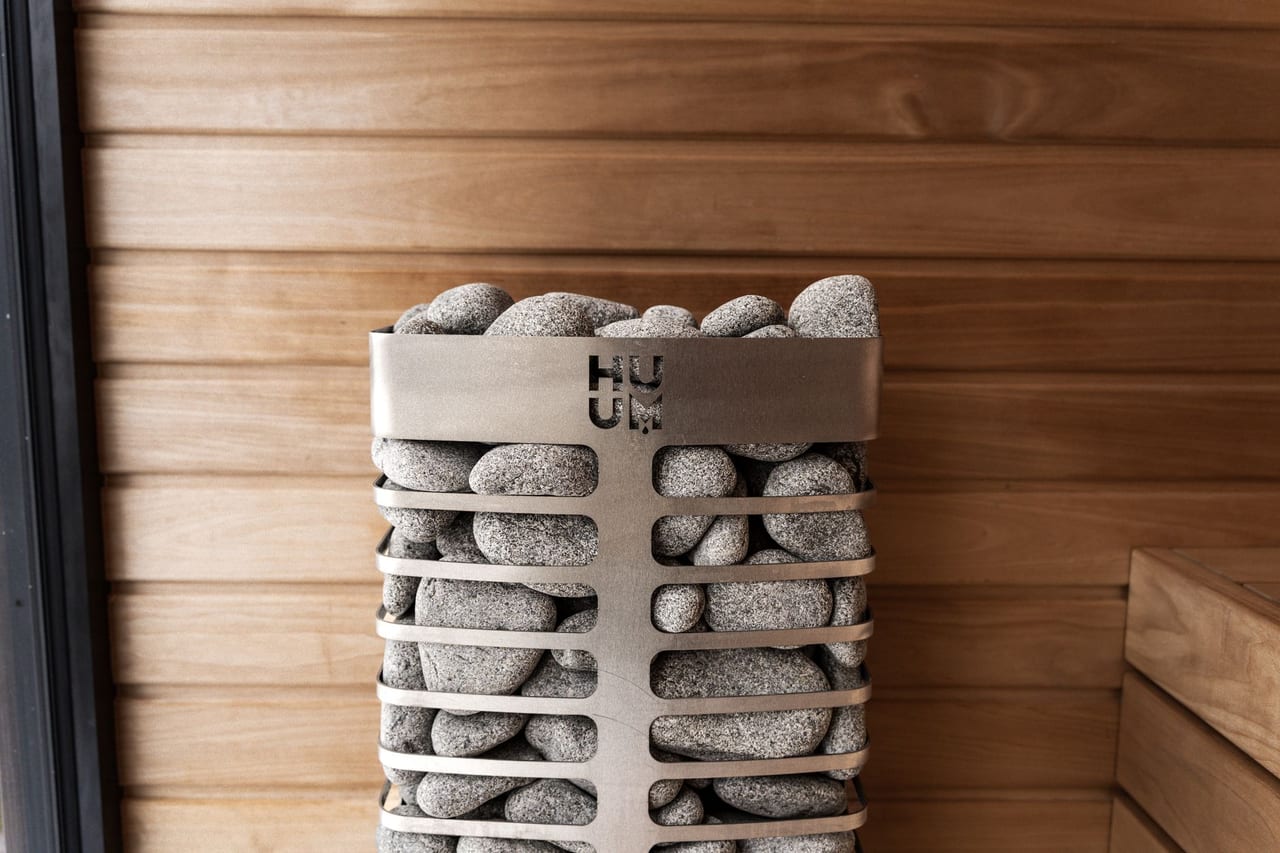
The Heater Question We Get Asked Most
When people design their sauna with us, one of the first questions is almost always about the heater: electric or wood-fired? It is a fair question. The classic image of a Finnish sauna involves a crackling wood fire, birch logs stacked by the door, and smoke curling into the evening air. That experience is real and it is wonderful — but it is not always practical, especially here in Thailand. Here is how we think about it.
Why We Default to Electric
The straightforward answer is convenience and reliability. Electric sauna heaters are what we fit in the vast majority of our builds, and there are good reasons for that.
Wood Is Expensive and Hard to Source in Thailand
A wood-fired sauna needs a steady, reliable supply of dry, seasoned hardwood — ideally split to a consistent size and stored somewhere it can stay dry. In Finland or Canada, that is easy. In Thailand, it is genuinely difficult. Suitable kiln-dried firewood is not widely available outside of specific areas, and when you do find it, the cost is high and the quality inconsistent. Over a year of regular sauna use, sourcing wood becomes a real logistical problem for most owners.
Electric Is Clean, Controllable and Ready in 30 Minutes
A good electric heater brings a sauna to temperature in around 30–45 minutes, holds it precisely, and turns off automatically. You set the temperature from a control panel or even your phone, and there is nothing to light, no ash to clean, and no smoke to manage. For a sauna that gets used three or four times a week — or daily — electric is simply the more liveable option.
Most Saunas Run on Standard Single-Phase Power
Heaters from 3 kW up to 9 kW run on a standard single-phase supply, which is what almost every Thai home and villa already has. Only larger commercial heaters above 9 kW require three-phase power. Our 3D designer at sisusauna.app shows you the exact electrical requirement for your build as you design it, so there are no surprises.
But We Can Source Wood-Fired Heaters
If you genuinely want the wood-burning experience — the smell of smoke, the ritual of building the fire, the particular quality of heat a wood stove produces — we completely understand, and we can make it happen. We source quality wood-fired sauna heaters for customers who specifically request them.
The things to think through honestly before going that route:
- Flue and ventilation: a wood stove needs a proper insulated flue running out through the roof. This adds to build cost and complexity, especially on an indoor sauna.
- Firewood supply: you will need a reliable local source of dry hardwood. We can advise, but sourcing it regularly is your responsibility as the owner.
- Outdoor placement: wood-fired saunas are almost always better suited outdoors, where smoke, ventilation and fire safety are easier to manage.
- Heat-up time: a wood stove takes longer to reach temperature and requires more active management than flicking a switch.
None of these are reasons to rule it out — just honest things to weigh up. If you want to explore a wood-fired build, get in touch and we will talk through what is involved for your specific site.
Something New: A Gas-Powered Sauna Heater
We are currently developing a gas-powered sauna heater — an option that sits interestingly between electric and wood-fired. Gas heats fast, gives a different quality of radiant heat compared to a standard electric element, and avoids the firewood supply problem entirely. It is not ready yet, but if you are interested in being among the first to hear about it, send us a message at sales@sauna.in.th and we will keep you updated as development progresses.
The Bottom Line
For most people building a sauna in Thailand, electric is the right call — practical, reliable, low-maintenance, and available in any size from a small personal sauna to a large commercial room. Wood-fired is a legitimate and beautiful option if you are prepared for what it takes. And if gas interests you, watch this space.
Ready to start designing? Build your sauna — heater and all — in our free 3D designer at sisusauna.app. Or reach out to us directly at sales@sauna.in.th if you have questions about heater options for your build.