

I’ve spent more time thinking about sauna heaters than most people spend thinking about their careers. That’s either a testament to my dedication or a cry for help – probably both.
Three years ago, I couldn’t have told you the difference between a 6 kW and a 9 kW heater. I was 130 kilograms (287lbs), my joints felt like they’d been packed with gravel, and my skin looked like I’d lost a fight with a cheese grater. Today, I’m 88 kilograms (194lbs), I run a sauna business with my Finnish partner Patrick, and I’ve become the kind of person who gets genuinely excited about stone capacity.
If you’re looking to buy a sauna heater in Thailand – whether for your home, your gym, or a commercial spa – this is everything I wish someone had told me when I started. No fluff, no sales pitch dressed up as advice. Just the stuff that actually matters.
The Science That Made Me Pay Attention
Before we get into the practical stuff, let me tell you why any of this matters beyond just sweating.
A landmark study from the University of Eastern Finland, published in Mayo Clinic Proceedings, tracked more than 2,300 men for more than 20 years. The findings were remarkable: men who used a sauna 4-7 times per week had a 40% lower risk of all-cause mortality compared to those who used it once a week. Cardiovascular disease risk dropped by 50% in frequent users.
Source: Laukkanen JA, Laukkanen T, Kunutsor SK. “Cardiovascular and Other Health Benefits of Sauna Bathing: A Review of the Evidence.” Mayo Clinic Proceedings, August 2018;93(8):1111-1121. (Source: mayoclinicproceedings.org)
Now, I’m not a doctor, and correlation isn’t causation. But when I read that study – sitting in my Bangkok apartment with joints that screamed every morning – something clicked. I started using saunas consistently. Two weeks later, the arthritis I’d had for a decade was gone. The eczema that dermatologists had shrugged at cleared within a month.
Coincidence? Maybe. But I wasn’t about to stop and find out.
The point is this: a sauna heater isn’t just a heating element. It’s the heart of something that might genuinely improve your health. So getting the right one matters.
Electric vs Wood-Burning: The Honest Comparison
This is the first decision you’ll face, and it’s not as simple as “which one’s better.”
I’ve had this conversation with Patrick more times than I can count. He grew up in Finland, where wood-burning stoves are practically a religion. I live in Bangkok, where my condo building would have some questions if I started storing firewood on my balcony.
Here’s the breakdown:
ELECTRIC HEATERS
This is what most people in Thailand will want. Electric heaters plug into your existing power supply (though they need a dedicated circuit – more on that later), heat up in 30-45 minutes, and give you precise temperature control.
The advantages are practical: no smoke, no chimney, no ash to clean, no firewood to source. You set your temperature, wait half an hour, and you’re sweating. Some models even have Wi-Fi control, so you can start heating from your phone while you’re stuck in Bangkok traffic, knowing your sauna will be ready when you finally get home.
The downside? Purists will tell you electric heat feels “different.” They’re not wrong. Electric heaters produce dry, consistent, and controllable heat. Some people miss the ritual of fire, the smell of wood smoke, the slight temperature variations that come with burning logs.
WOOD-BURNING STOVES
If you’re building an outdoor sauna at a resort in Chiang Mai or a private property in Phuket, wood-burning makes more sense. You get that authentic Finnish experience – the crackling fire, the ritual of feeding logs, the softer heat that many sauna enthusiasts prefer.
But be realistic about the commitment. You need a proper chimney installation. You need a consistent supply of dry firewood (not as easy to find in Thailand as you’d think). You need someone willing to tend the fire. And you need patience – wood-burning saunas can take 1-2 hours to reach the proper temperature.
For most residential installations in Thailand, especially in Bangkok, Pattaya, or urban Phuket, electricity is the practical choice. I’m not saying that to sell you something – I sell both. I’m saying it because I’ve watched too many people buy wood-burning stoves for their townhouse and regret it within a month.
How to Choose the Right Heater Size
This is where most people get it wrong, and it’s the mistake that costs you the most.
Get a heater that’s too small for your sauna room, and you’ll spend 90 minutes waiting for temperatures that never quite arrive. Get one that’s too big, and you’re wasting electricity while the heater cycles on and off trying not to cook you.
The calculation is straightforward: determine your sauna room’s cubic volume (length × width × height in metres), then match it to the appropriate kilowatt rating.
Here’s the sizing guide I use:
3KW HEATER
Suitable for: 3-5 cubic metres
Room example: 1.2m × 1.2m × 2.1m
Best for: Small 1-2 person saunas, compact home installations
4.5KW HEATER
Suitable for: 4-7 cubic metres
Room example: 1.5m × 1.5m × 2.1m
Best for: 2-3 person saunas, couples, small home gyms
6KW HEATER
Suitable for: 6-10 cubic metres
Room example: 1.8m × 1.8m × 2.1m
Best for: 3-4 person saunas, family use
8KW HEATER
Suitable for: 8-14 cubic metres
Room example: 2.0m × 2.0m × 2.1m
Best for: 4-6 person saunas, larger home installations
9KW HEATER
Suitable for: 9-16 cubic metres
Room example: 2.2m × 2.2m × 2.2m
Best for: 5-6 person saunas, small commercial use
12.5KW HEATER
Suitable for: 12-20 cubic metres
Room example: 2.5m × 2.5m × 2.3m
Best for: 6-8 person saunas, commercial spas, wellness centres
15KW HEATER
Suitable for: 15-25 cubic metres
Room example: 3.0m × 3.0m × 2.3m
Best for: Large commercial installations, resort spas, hotels
THE 20% RULE FOR OUTDOOR SAUNAS
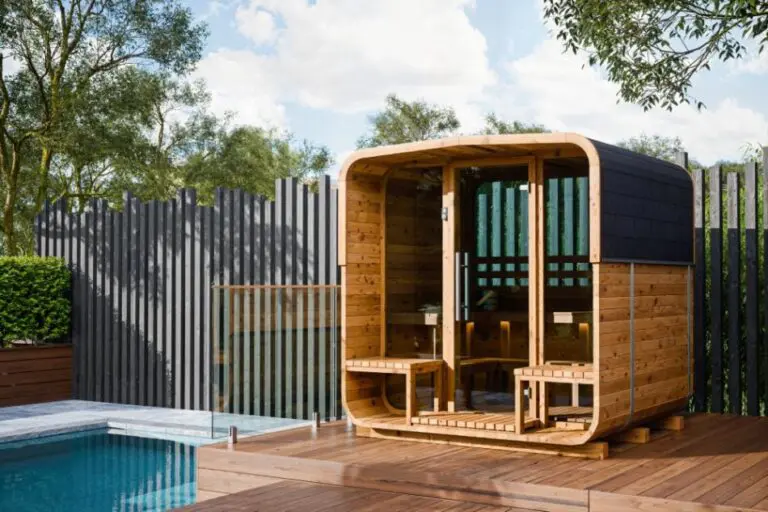
If your sauna is outdoors or has large glass windows or doors, add 20% to your cubic metre calculation. Those glass panels look gorgeous, but they bleed heat like a sieve. An outdoor 8 cubic metre sauna should be treated as a 10 cubic metre space when selecting your heater.
I learned this the hard way. Our first outdoor installation at a resort used the “correct” heater size according to the room dimensions. It struggled to hit proper temperatures during the incredible season. We upgraded to the next size, and everything worked as expected.
Understanding Controller Types
The controller is how you interact with your heater. It’s the difference between a car with a manual gearbox and one with an automatic – both get you there, but the experience is different.
ON-STOVE CONTROLLERS
These are built into the heater body itself. You’ve got two dials – one for temperature, one for timer – mounted right on the unit—simple, reliable, nothing to go wrong.
The catch? You need to reach into the hot sauna to make any adjustments. If you’re mid-session and decide you want it a bit cooler, you’re either leaning into the heat or opening the door and letting all your hard-won warmth escape.
Our Standard Stove Heater uses this setup. It’s the most affordable option, starting at ฿30,000 for a 3KW unit. Perfect if you’re building on a budget and don’t mind the simplicity.
EXTERNAL CONTROLLERS
These mount on the wall outside your sauna room: digital LCD screen, precise temperature control, and longer timer options. You can adjust everything without disturbing your session.
The controller connects to the heater via a cable routed through a small hole in the sauna wall. It’s not a complicated installation – any competent electrician can handle it – but it does mean a bit more setup during initial installation.
Our Standard Stove Heater with External Controller starts at ฿39,000. Worth the upgrade if you’re the type who fiddles with settings.
WI-FI CONTROLLERS
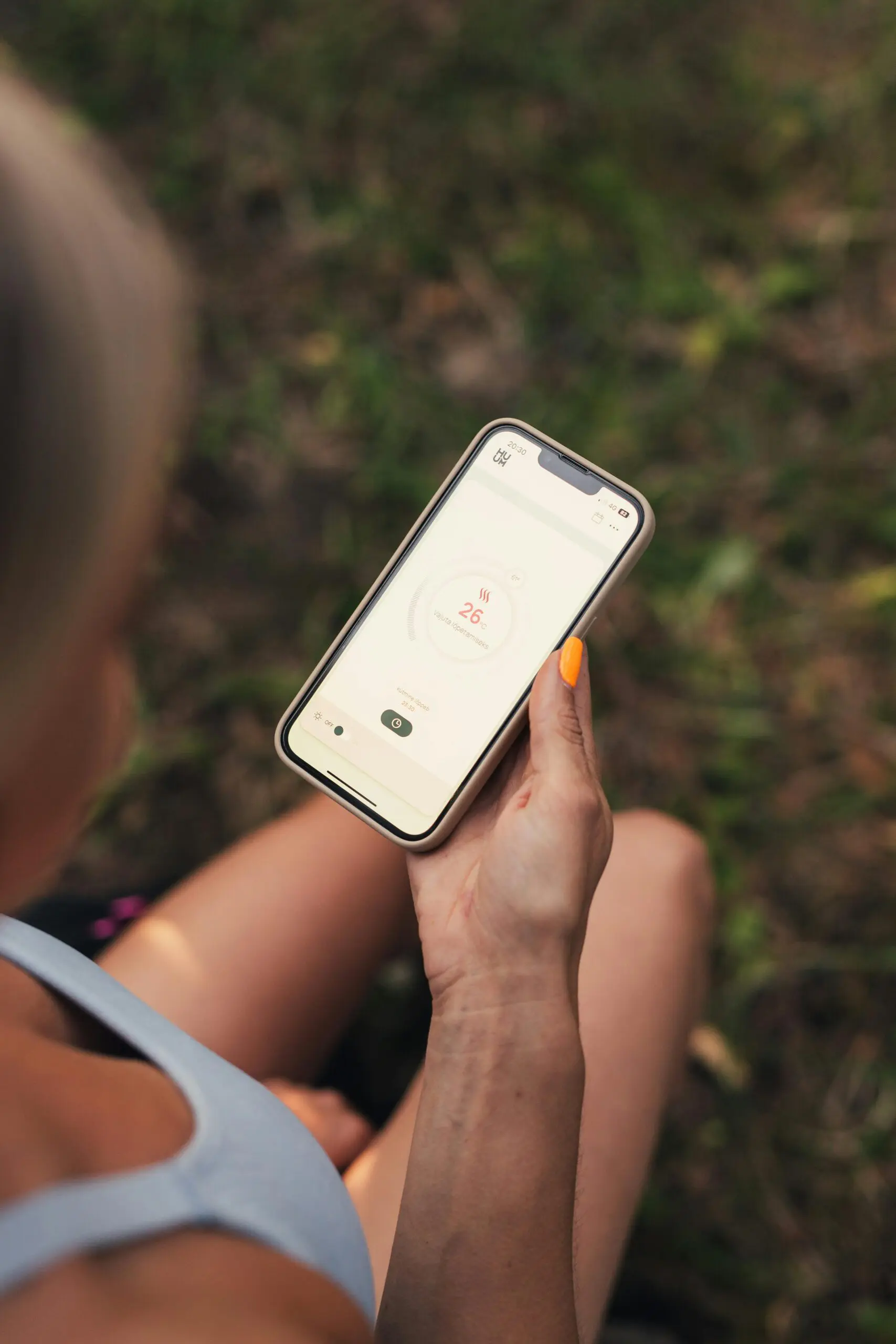
This is where things get modern. The controller operates the same way as the external version, but it includes a wireless adapter that connects to your home network. Download the app, and suddenly you can start your sauna from anywhere.
I’ll be honest – I thought this was a gimmick when I first saw it. Then I spent an hour crawling through Sukhumvit traffic, knowing my sauna was heating up at home, and I arrived to find it at the perfect temperature. Now I can’t imagine going back.
The adapter plugs directly into the controller and connects to your Wi-Fi like any smart home device. The app guides you through setup in a few minutes. You don’t need to be technical.
We offer Wi-Fi control on several models, starting with the Standard Stove Heater with Wi-Fi at ฿42,000.
Heater Designs: Which Style Suits Your Sauna?
This is where aesthetics meet function. Different heater designs aren’t just about looks – they affect how heat is distributed and how much steam you can produce.
STANDARD RECTANGULAR HEATERS
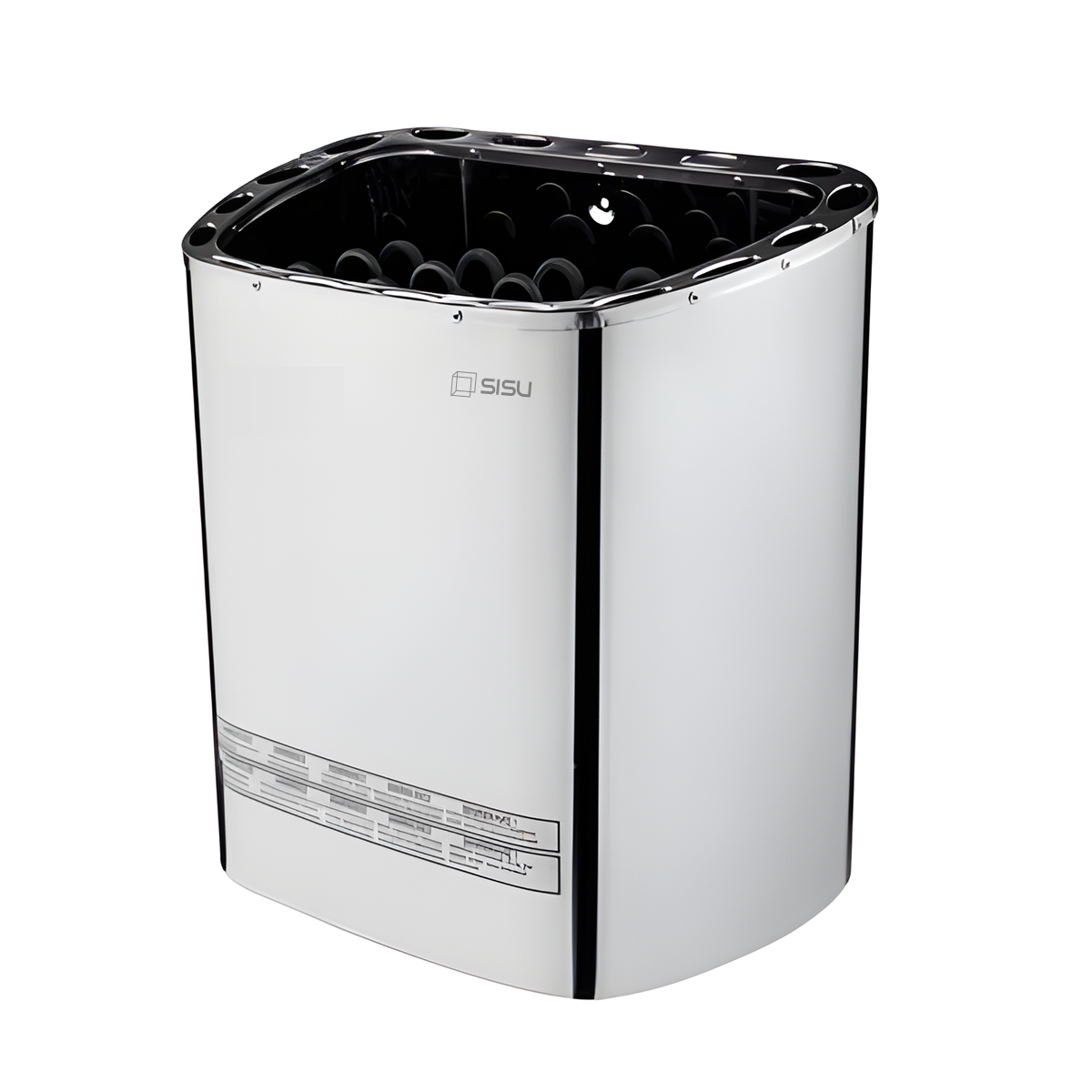
The classic sauna heater design. A rectangular box (typically around 41 × 27 × 52cm) that fits neatly into a corner. The stone tray sits on top, holding 18-22kg of stones.
This is the workhorse of the sauna world. Compact, efficient, unobtrusive. If you’re building a home sauna and want something that does the job without making a statement, this is it.
CYLINDER (TOWER) HEATERS
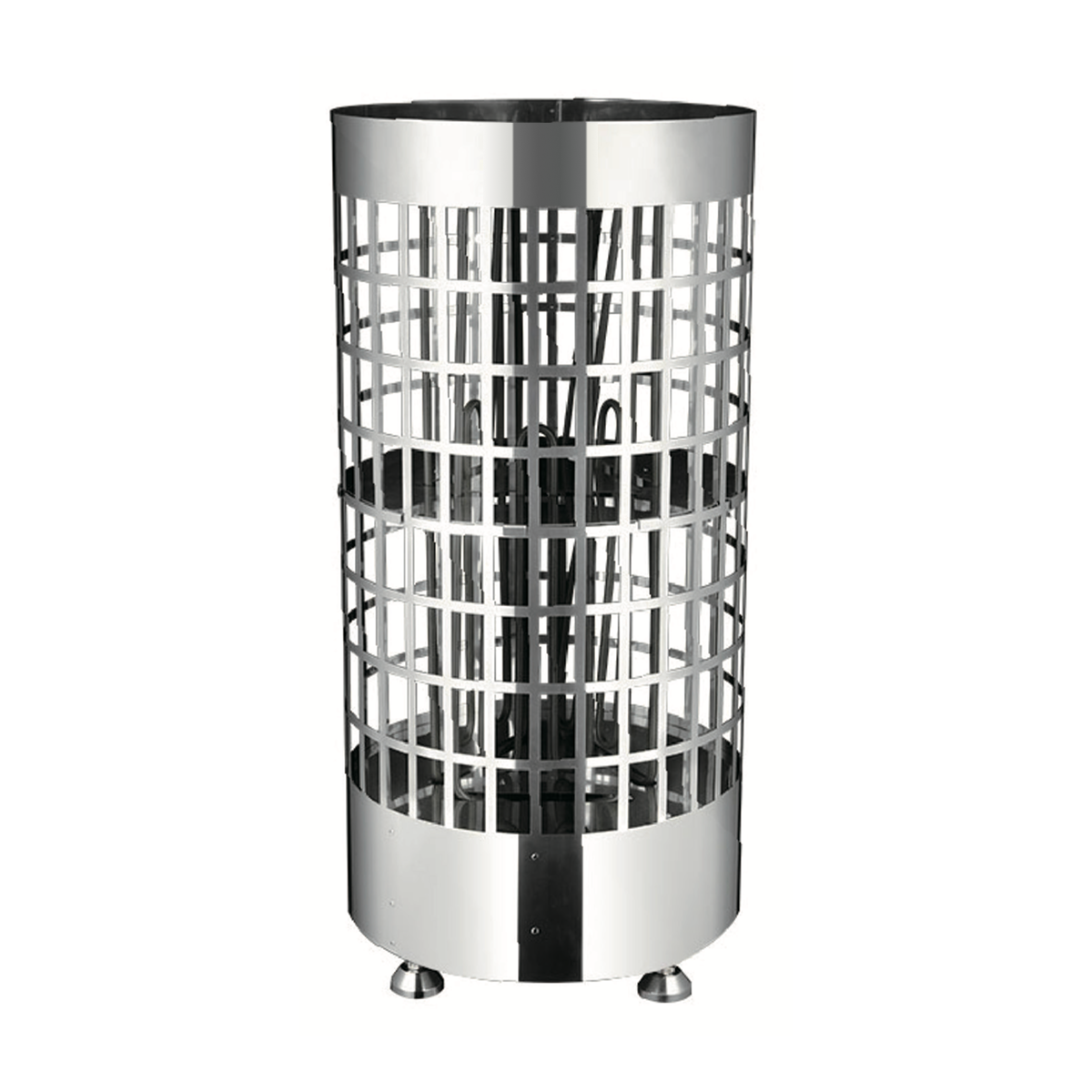
Standing 80cm tall and 38cm in diameter, cylinder heaters make a visual statement. But the real difference is stone capacity – these hold 50-80kg of stones, compared to 18-22kg in a rectangular unit.
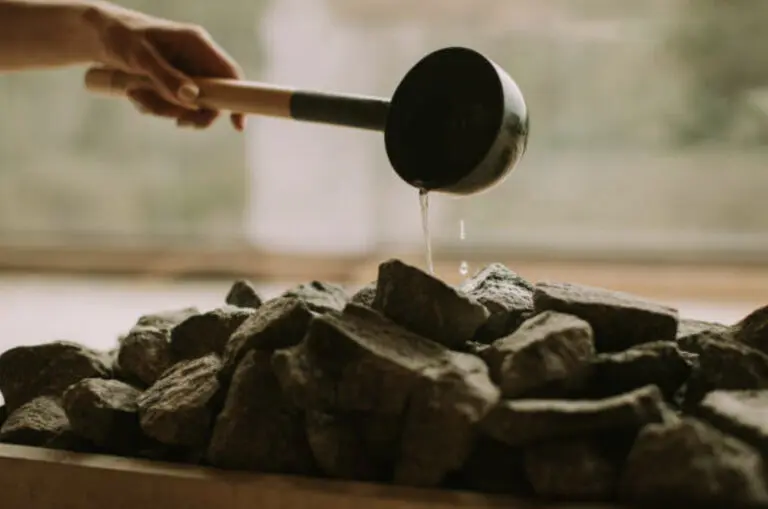
Why does stone mass matter? More stones mean more thermal mass. The heater stores more energy, so the heat stays more consistent during your session. When you pour water over the steam (löyly), you get higher-quality steam because the stones don’t cool as quickly.
Our Silver Cylinder Stove Heater with Wi-Fi starts at ฿42,000. If you’re serious about steam quality and want something that looks impressive, this is worth considering.
NEST (BASKET) HEATERS
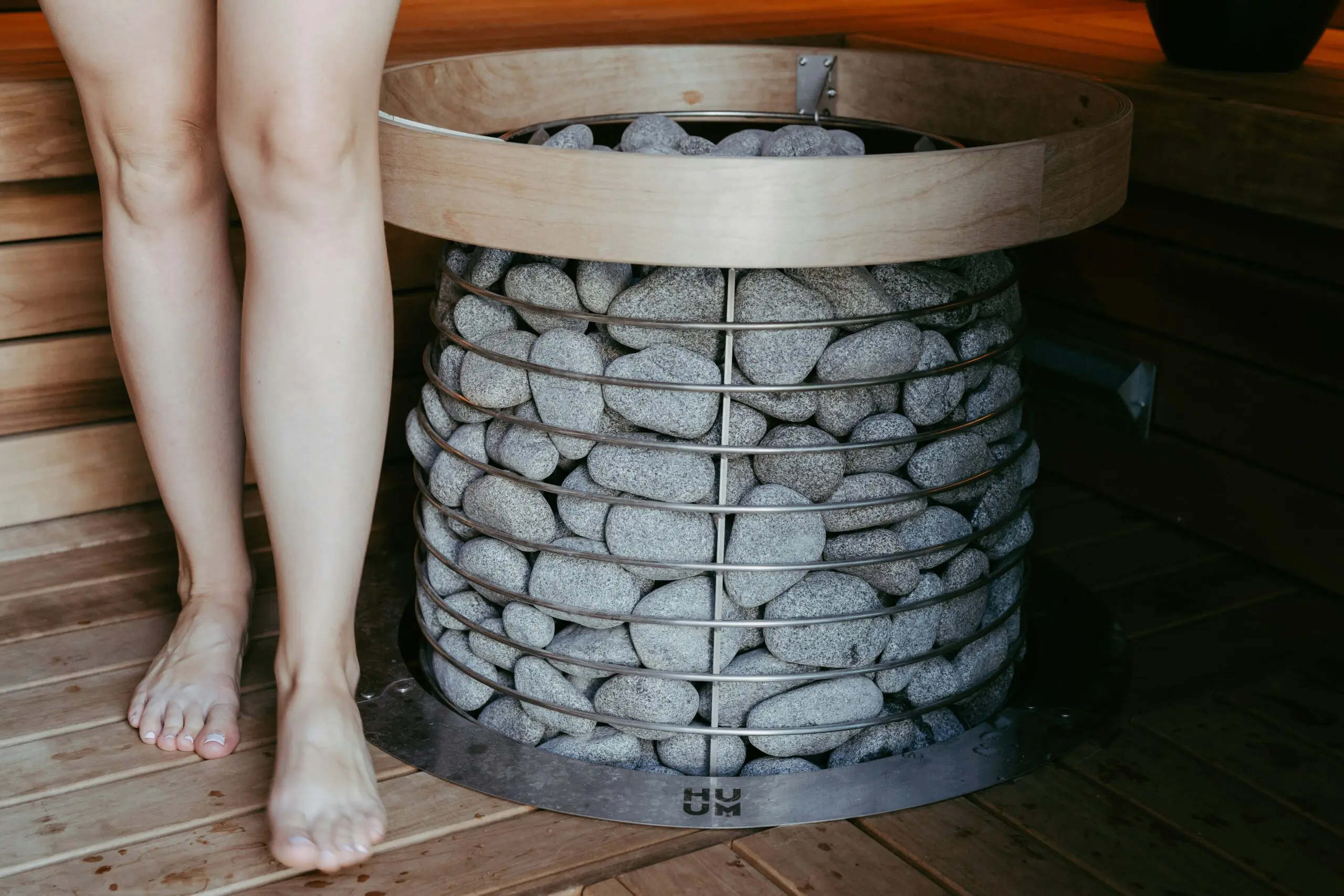
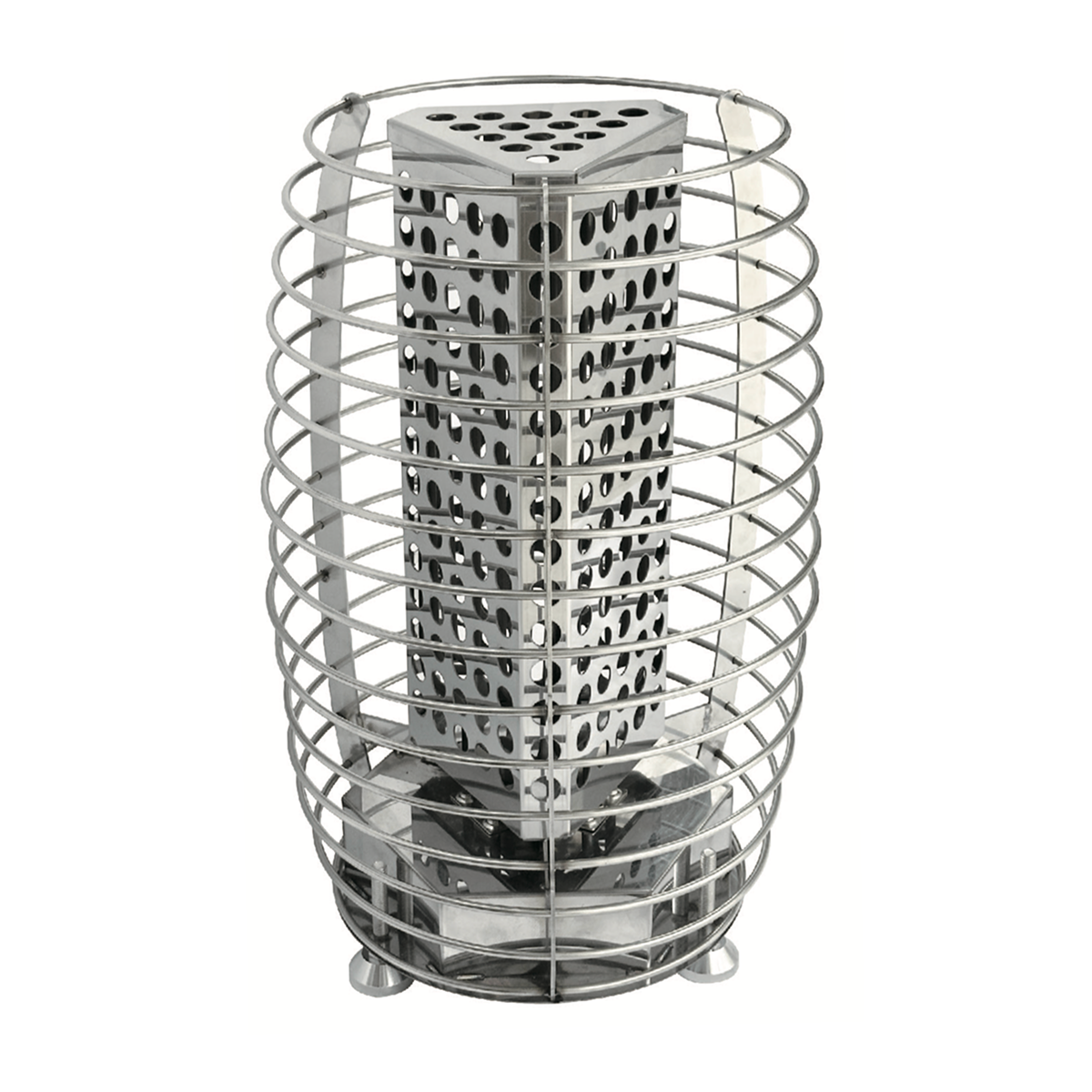
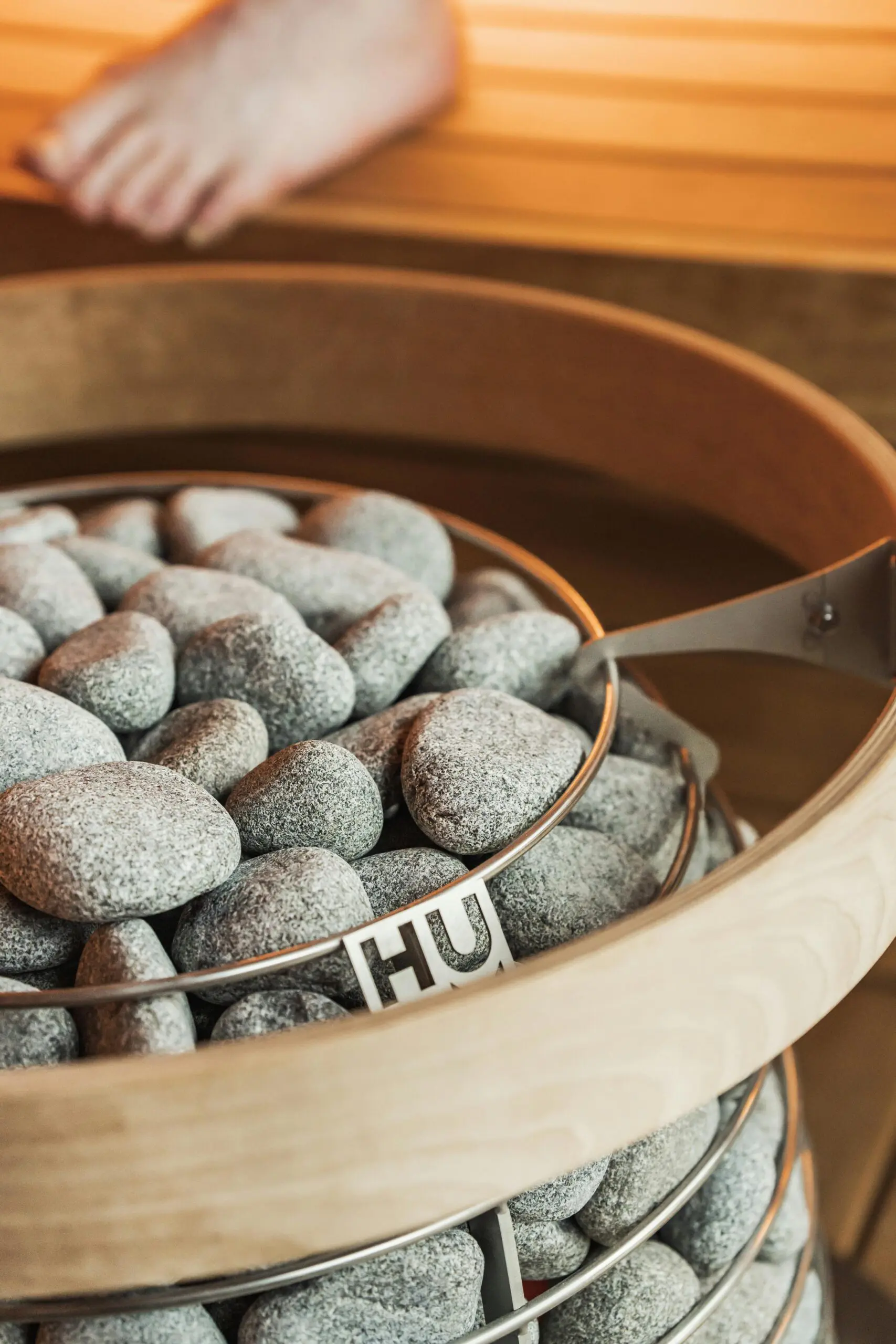
The nest design is an open basket frame that surrounds the heating elements with stones on all sides. Picture a wire cage filled with volcanic rocks, with the heating elements threading through the middle.
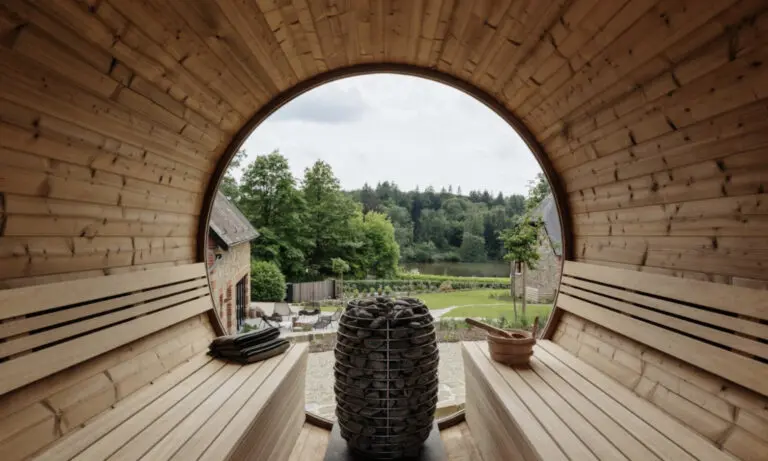
These hold around 75kg of stones and allow 360-degree heat distribution. The open design also shows off the rocks themselves, which, if you’ve ever seen quality sauna stones heated to 100°C, are genuinely beautiful.
Our Silver Nest Stove Heater with Wi-Fi and Black Nest Stove Heater with Wi-Fi both start at ฿47,000. The black finish is particularly striking in modern sauna interiors with dark timber.
PRISM HEATERS
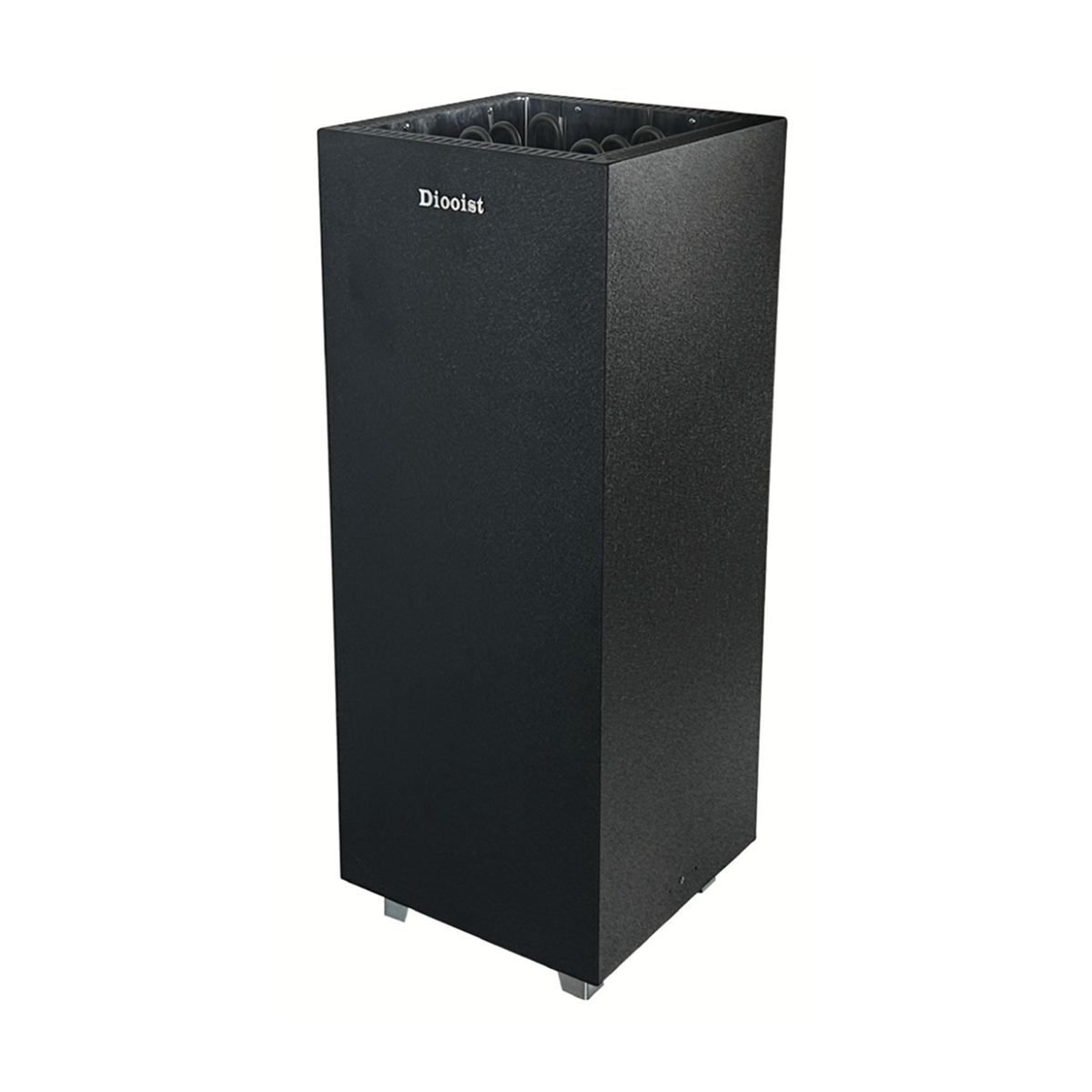
If budget isn’t your primary concern and you want something that looks like it belongs in a luxury spa, the premium tower design is the right choice.
Our Black Prism heater stands 80.5cm tall, with clean geometric lines and a matte-black finish. Heavier-gauge construction (20.5kg vs 10-13kg for standard models) means it’s built for demanding use. The enclosed stone chamber gives a minimalist, almost architectural aesthetic.
It’s our most expensive heater, starting at ฿60,000 for the 3KW model. But for high-end residential installations or boutique commercial spaces, it’s hard to beat.
Energy Consumption: What Will This Cost to Run?
This question comes up constantly, and I understand why. Electricity in Thailand isn’t cheap, and nobody wants a surprise bill.
Here’s the reality: sauna heaters use significant power while they’re heating up, then much less once they reach temperature. A 6KW heater doesn’t use 6KW continuously – it cycles on and off to maintain temperature, typically averaging 40-60% of its rated power once hot.
Let’s do some maths for a typical home user:
Heater: 6KW
Heating time: 45 minutes at full power = 4.5 kWh
Session time: 1 hour at ~50% duty cycle = 3 kWh
Total per session: approximately 7.5 kWh
At typical Bangkok electricity rates (around ฿4-5 per kWh), that’s ฿30-40 per session.
Use your sauna four times a week, and you’re looking at ฿500-650 per month. Not nothing, but not catastrophic either – about the same as running your air conditioning for a few extra hours a day.
Larger heaters use proportionally more power but heat faster. A 9 kW heater in an appropriately sized room might reach the target temperature in 30 minutes rather than 45, partially offsetting the higher wattage.
Safety Features to Look For
I need to talk about this because too many people don’t ask about it until something goes wrong.
Every heater we sell is TÜV Safety Certified. TÜV is a German testing organisation with some of the world’s strictest safety standards. If a heater has TÜV certification, it’s been tested for electrical safety, fire risk, and durability.
Beyond certification, here’s what to look for:
OVERHEAT PROTECTION
The heater should automatically shut off if it exceeds safe operating temperature. This can occur if stones are improperly placed, block airflow, or the ventilation in your sauna room is inadequate.
TIMER LIMITS
Most heaters have a maximum timer of 4-8 hours. This prevents situations where someone sets the sauna running and then forgets about it for a day.
ELEMENT PROTECTION
The heating elements should be positioned so they can’t come into direct contact with anything that might fall into the heater. Quality heaters have guards or stone arrangements that protect the elements.
DEDICATED CIRCUIT REQUIREMENT
This isn’t a feature of the heater itself, but any reputable supplier will tell you: your sauna heater must be installed on a dedicated electrical circuit with an appropriate MCB (miniature circuit breaker). This isn’t optional. Running a 6KW heater on a circuit shared with other appliances is asking for trouble.
Installation: What to Expect
I need to clarify: Sisu Sauna does not install standalone heaters. We provide detailed guidance, but a licensed electrician must perform the actual electrical work.
This isn’t us being unhelpful – it’s about doing things correctly. Sauna heater installation involves:
- A dedicated electrical circuit (typically 30-40A for residential heaters, up to 60A for large commercial units)
- Appropriate MCB/circuit breaker
- Heat-resistant wiring rated for sauna conditions
- Correct clearances from walls and ceiling
- Proper ventilation in the sauna room
A qualified electrician can handle all of this. In Bangkok, expect to pay ฿3,000-8,000 for installation, depending on your existing electrical infrastructure and the complexity of the run from your electrical panel.
For external and Wi-Fi controllers, a small hole is also required in the sauna wall for the cable connection. This is straightforward – your electrician can do it during setup.
The Commercial Consideration
If you’re outfitting a spa, wellness centre, gym, or hotel, the calculation changes.
Commercial use means more sessions per day, higher customer expectations, and less tolerance for downtime. You need heaters that are built for heavy-duty cycles and backed by warranties that cover commercial use.
Our Nest heaters (both Silver and Black) are available up to 15 kW and are specifically designed for larger commercial installations. The robust construction handles the demands of all-day operation.
A few things to consider for commercial installations:
- Three-phase power may be required for heaters above 9KW. Your electrician needs to verify this before you purchase.
- Larger stone capacity (75kg in the Nest heaters) means better recovery between sessions. When one guest finishes and the next is waiting, you want the heater to bounce back quickly.
- Wi-Fi control allows staff to monitor sauna temperatures from a central location rather than constantly checking rooms.
- Consider purchasing backup heating elements. In a commercial setting, downtime costs money. Having spare parts on hand means repairs can be completed the same day rather than waiting for shipping.
Where to Buy Sauna Heaters in Thailand
Full disclosure: I sell sauna heaters. You’re reading this on the Sisu Sauna blog. But I’m going to give you honest advice regardless.
If you’re in Bangkok, you can visit our showroom to see heaters in person. There’s something to be said for actually looking at a product before spending ฿30,000-60,000 on it. You can see the build quality, feel the weight, and ask questions in person.
We deliver throughout Thailand – Bangkok, Phuket, Chiang Mai, Pattaya, Hua Hin, Koh Samui, everywhere. Standard delivery is 3-6 weeks from order confirmation. Heaters and stones ship in separate boxes (2-4 boxes depending on the model).
Delivery is free to the ground floor or building loading dock. If you’re in a walk-up building or there are stairs, please let us know so we can discuss handling requirements.
What About Warranty and Support?
All our heaters include a 1-year manufacturer’s warranty covering defects in materials and workmanship.
What’s not covered: damage from improper installation, misuse (like pouring buckets of water directly into the heating element – yes, this happens), or normal wear on heating elements after years of use.
What happens if something goes wrong? Contact us. We stock replacement parts and can usually arrange repairs within Thailand. If the issue is a manufacturing defect within the warranty period, we replace the faulty component at no cost.
For commercial customers, we recommend discussing extended warranty options. High-use environments wear through components faster, and a more extended warranty provides peace of mind.
Maintenance: Keeping Your Heater Healthy
Sauna heaters are remarkably low-maintenance, but they’re not zero-maintenance.
Stones: Check your stones every few months. Over time, they can crack from repeated heating and cooling cycles. Cracked rocks should be replaced; broken pieces can fall through the stone tray and interfere with the heating elements. Replacement stones are inexpensive and easy to swap.
Elements: Heating elements don’t last forever. In a home sauna used 4-5 times per week, expect elements to last 5-10 years before needing replacement. Commercial use accelerates this. Replacement elements are available for all our heaters.
Controller: External and Wi-Fi controllers are electronic devices that should be kept dry. If you notice moisture condensation on the controller display, improve ventilation around the controller.
Stone arrangement: Don’t pack stones too tightly. Air must circulate through the stone pile to ensure efficient heating. If your heater is taking longer than usual to reach temperature, check that the stones aren’t blocking airflow.
A Note on Renting Sauna Heaters
We occasionally get asked about heater rentals for events. I’ll be honest – this isn’t something we offer, and I’m not aware of anyone in Thailand who does.
The reason is practical: sauna heaters need permanent installation with dedicated electrical circuits. You can’t just plug them in like a coffee machine. Any “portable” sauna solution for events would be either infrared panels (which work but don’t provide the same experience) or mobile sauna trailers (which exist but are rare in Thailand).
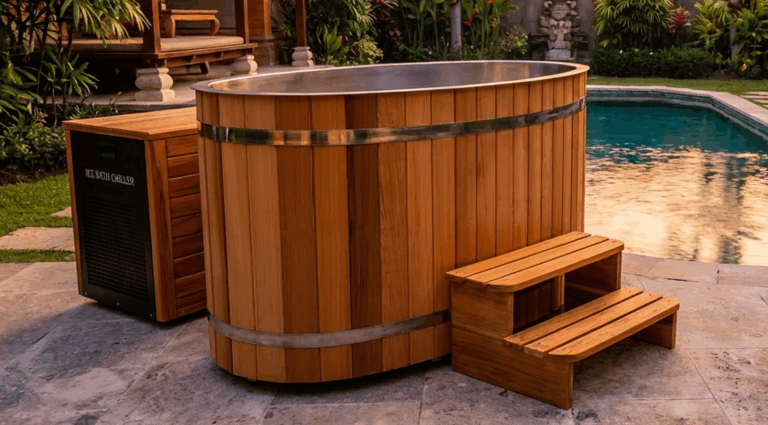
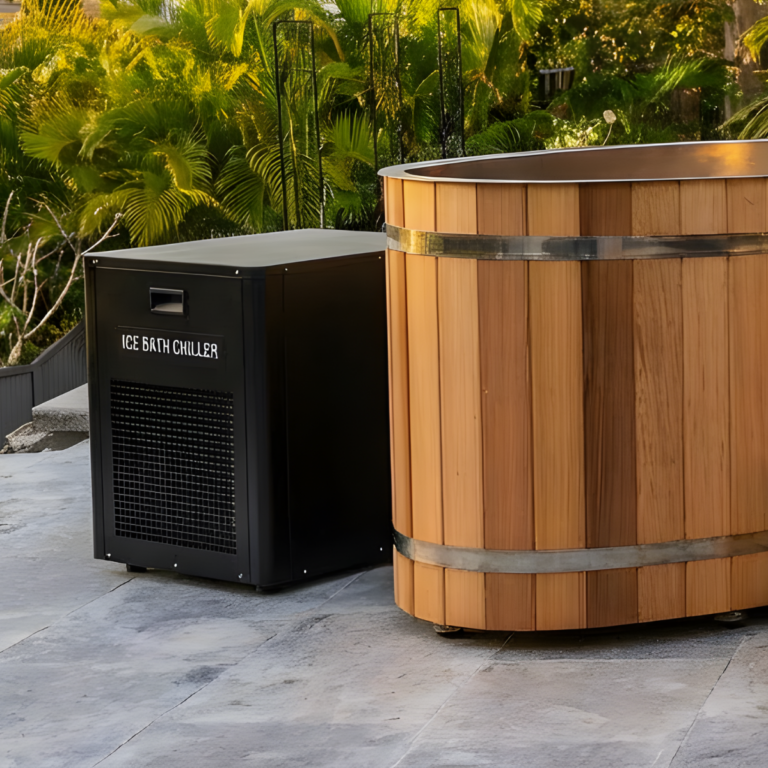
If you’re planning a wellness event, the better approach might be to partner with a venue that already has sauna facilities, or to hire ice baths (which are portable and don’t require electrical installation).
What I Actually Recommend
After three years in this business and thousands of hours in saunas, here’s my honest take:
For most home users building a small-to-medium sauna (2-4 person), the Standard Stove Heater with External Controller offers the best balance of features and value. Wi-Fi is nice but not essential. The external controller makes a genuine difference to the experience.
If you’re investing in a premium home sauna and want the complete package, the Silver Cylinder with Wi-Fi or the Black Nest with Wi-Fi delivers both superior steam quality and the convenience of app control.
For commercial installations, the Nest heaters in 9KW-15KW are built for the job. The extra stone capacity and robust construction justify the higher price in a business context.
For budget-conscious buyers, the Standard Stove Heater with on-stove controller delivers everything a heater needs at the lowest price point. You’re not getting Wi-Fi or digital displays, but you’re getting reliable heat and proper steam.
The Question I Get Asked Most
“Carl, is this really worth it?”
I think about my own journey – the years of chronic pain, the skin problems, the weight that seemed impossible to shift. I think about sitting in a sauna today, 42 kilograms lighter, with joints that don’t wake me up at night.
A sauna heater is a piece of equipment. What you do with it is up to you. Use it once and forget about it; it’s not worth it. Build it into your routine – three, four, five times a week – and the research suggests you’re investing in something that might genuinely extend your life.
That Finnish study found a 40% reduction in all-cause mortality for frequent sauna users—forty per cent. If a pill did that, it would be front-page news.
I’m not promising miracles. I’m telling you what the science says and what happened to me. The rest is your call.
Ready to talk about which heater is right for your space? Get in touch. And if you buy from someone else after reading this, at least you’ll know you’re buying the right thing.